
Glaucoma Symptoms – Signs and Symptoms
📅 November 5, 2026 | ⏱️ 8 min read | 📂 Eye Health
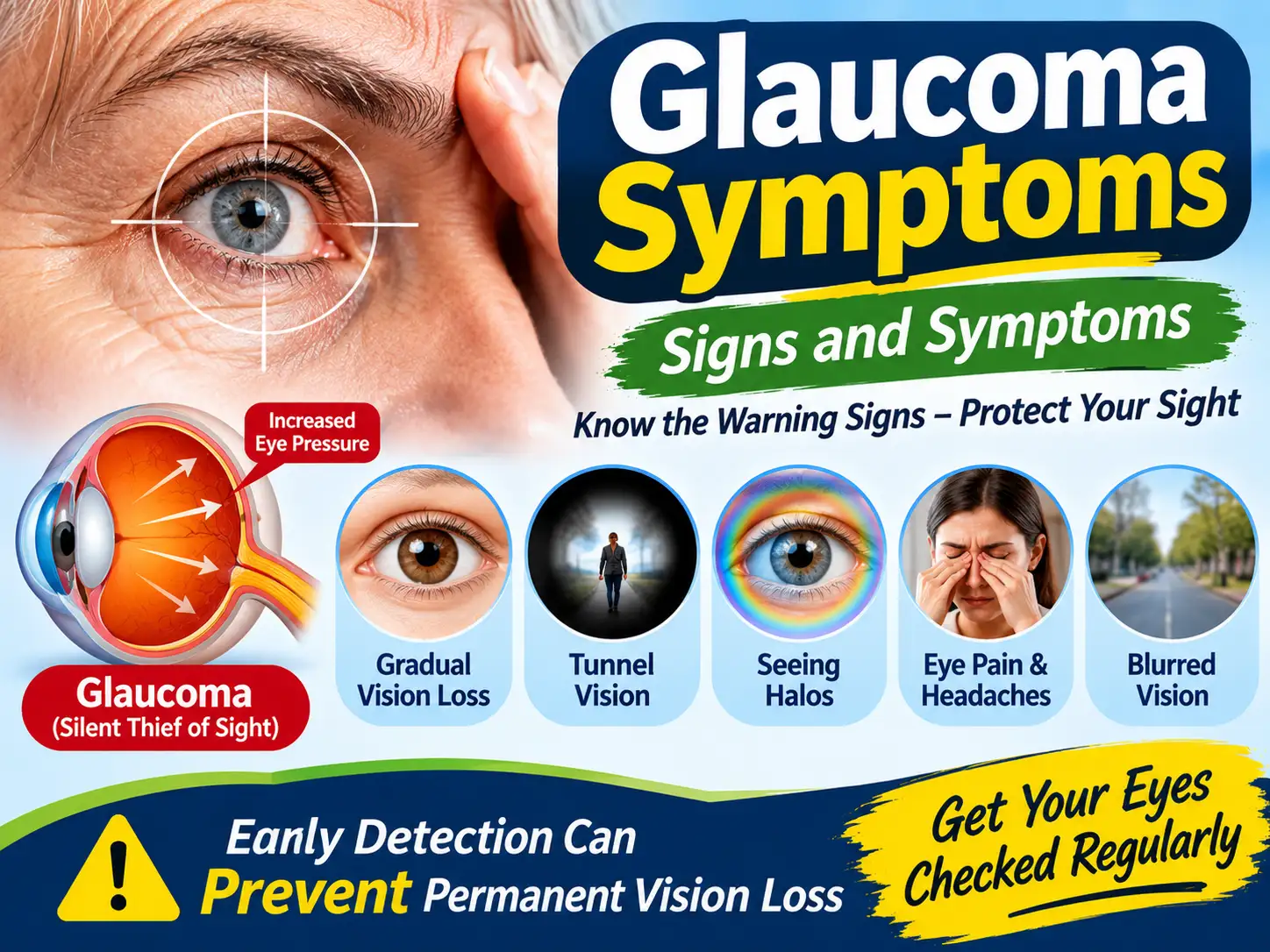
Our vision is one of our most valuable senses. Many eye conditions can gradually develop without us noticing. One of the most dangerous is glaucoma. Often known as the ‘silent thief of sight’, glaucoma can cause permanent damage to your vision.
Knowing the glaucoma symptoms can help detect it early. In this article we will discuss the early signs, the symptoms of glaucoma and also the difference between glaucoma and cataract symptoms.
What is Glaucoma?
Firstly, it is good to understand what glaucoma actually is. Glaucoma is group of eye conditions that can cause damage to the optic nerve (needed for good vision).
This is usually due to increased pressure in the eye (intraocular pressure), however can still happen with normal eye pressure. As this causes permanent damage to the optic nerve, detecting it early is the key.
Signs and Symptoms of Glaucoma
The most worrying thing about glaucoma is that most people will not experience any symptoms in the early stages. The eye pressure builds up slowly over many years meaning the brain will get used to losing your side vision.
Once you start to notice your vision fading it is usually too late and there will be a large amount of damage to your optic nerve. Regular eye exams will help detect the early signs and symptoms of glaucoma.
Open Angle Glaucoma
Open angle glaucoma is the most common type of glaucoma. It is a slow developing condition with few symptoms.
Symptoms of Glaucoma (Open Angle)
- Tunnel vision – This will be the most obvious symptom. You will start losing your side vision. This will start from the outside of your vision and slowly move in creating a tunnel like effect.
- Blind spots – You may notice you have missing patches in your vision when looking to the side.
- Loss of central vision – In later stages of glaucoma you will lose your central vision resulting in complete blindness.
- Painless – Usually there is no pain associated with open angle glaucoma.
Acute Angle Closure Glaucoma
A completely different condition to open angle glaucoma is acute angle closure (closed angle) glaucoma. This is a medical emergency. It occurs when fluid in the eye suddenly can’t flow out. This will cause the eye pressure to rise rapidly.
What are symptoms of glaucoma (Angle Closure)?
If you experience any of the following seek medical attention immediately.
- Severe eye pain – Sudden intense throbbing in the eye.
- Severe headache – Often accompanied with nausea and vomiting.
- Blurred vision – Sudden blurring of vision.
- Coloured halos – Seeing rainbow coloured rings around lights.
- Red eyes – Bloodshot eyes.
Normal Tension Glaucoma
A common myth is that glaucoma only occurs with raised eye pressure. Normal tension glaucoma means that although the eye pressure is in the normal range damage is occurring to your optic nerve.
The what is glaucoma symptoms of this type are similar to open angle glaucoma. You will start to lose your side vision gradually and there will be no pain. The cause is unknown but may be due to reduced blood flow to the optic nerve.
Different Stages
To give you a clear idea of the what are the symptoms of glaucoma we will break it down into different stages.
Early Stage
- No symptoms – Visual will usually be fine. This is why regular eye exams are important.
- Detected – An optometrist will be able to pick up on changes to your optic nerve or increased pressure.
Intermediate Stage
- Loss of side vision – You may start bumping into things. You will have difficulty seeing objects from the corners of your eyes.
- Poor night vision – It will become harder to see in low light.
Late Stage
- Tunnel vision – You will have a significant loss of vision.
- Loss of central vision – Eventually you will start to lose your central vision and become blind.
Cataracts vs Glaucoma
As we get older we often suffer from multiple eye conditions. Many people will want to know the symptoms of cataracts and glaucoma as they are leading causes of vision loss.
Although they are two separate diseases they often occur together.
Cataracts
- Cause – Opacity of the natural lens inside the eye.
- Symptoms – Blurred or cloudy vision, light sensitivity, halos around lights, dull colours and frequent changes to glasses prescription.
- Key Difference – Cataracts are easily treatable with surgery. You will be able to fully restore your vision.
Glaucoma
- Cause – Damage to the optic nerve (usually from pressure).
- Symptoms – Often there will be no symptoms. You will notice a gradual loss of side vision.
- Key Difference – Any vision loss is permanent. Treatment will aim to reduce eye pressure to stop further damage.
Cataracts and glaucoma can occur together. If you have cataracts your optometrist may notice signs of glaucoma during your pre-op appointment.
Risk Factors
Whilst anyone can suffer from glaucoma, some people are at higher risk. If you fall into any of the following groups you should be extra aware of the symptoms.
- Over 60 – People over the age of 60 are at higher risk, particularly Hispanic/Latino. African Americans are at risk from 40.
- Family history of glaucoma – If your parent or sibling suffer from glaucoma you are at much higher risk.
- Medical conditions – Suffering from diabetes, high blood pressure or heart disease can increase your risk.
- Eye conditions – Having very short sighted eyes (Myopia) or a history of eye injury.
- Steroids – Using steroid eye drops or oral steroids for long periods.
- Thin cornea – Having a thinner cornea or narrow eye angle.
Diagnosis
As you can not always rely on glaucoma symptoms to tell you if you have glaucoma you will need to have regular eye exams. A full eye exam will include:
- Tonometry – Measuring eye pressure.
- Ophthalmoscopy – Looking at the optic nerve.
- Perimetry – Testing your side vision.
- Gonioscopy – Assessing eye drainage.
- Pachymetry – Measuring cornea thickness.
Treatment
Unfortunately there is no cure for glaucoma however there are successful treatments. These aim to reduce eye pressure to stop further damage to your optic nerve.
- Eye drops – This is the most common treatment. This will help reduce fluid or increase drainage.
- Oral medication – Occasionally medication will be given to reduce eye pressure.
- Laser treatment – Treatment such as trabeculoplasty can help increase drainage.
- Surgery – If eye drops and laser treatments do not work then surgery such as trabeculectomy or minimally invasive glaucoma surgery can create a new drainage route.
Note – Once you have lost any vision from glaucoma it cannot be recovered. Treatment will help to preserve vision.
When to see a Doctor
If you experience any sudden severe symptoms such as those seen in acute angle closure glaucoma you must visit an optometrist immediately.
- Severe eye pain.
- Nausea and vomiting.
- Sudden vision problems.
- Red eye.
If you do not have any symptoms, the American Academy of Ophthalmology recommend having a full eye exam every 3-5 years if under 40, every 1-2 years if between 40-54 and once a year if 55+.
Conclusion
Knowing the symptoms of glaucoma will help protect you from this silent disease. As there are often no symptoms in the early stages it is best to have regular eye exams. If you start to notice any changes to your side vision or suddenly suffer with painful symptoms of acute glaucoma, please seek medical attention.
FAQ
Related Articles
- Mucocele: Causes, Symptoms and Treatment
- Cat Vomiting Causes & Colours
- Saturated vs Unsaturated Fats
- Five Food Groups Guide