
Cat Vomiting – Causes, Colours And When To See A Vet
📅 October 25, 2026 | ⏱️ 10 min read | 📂 Pet Care
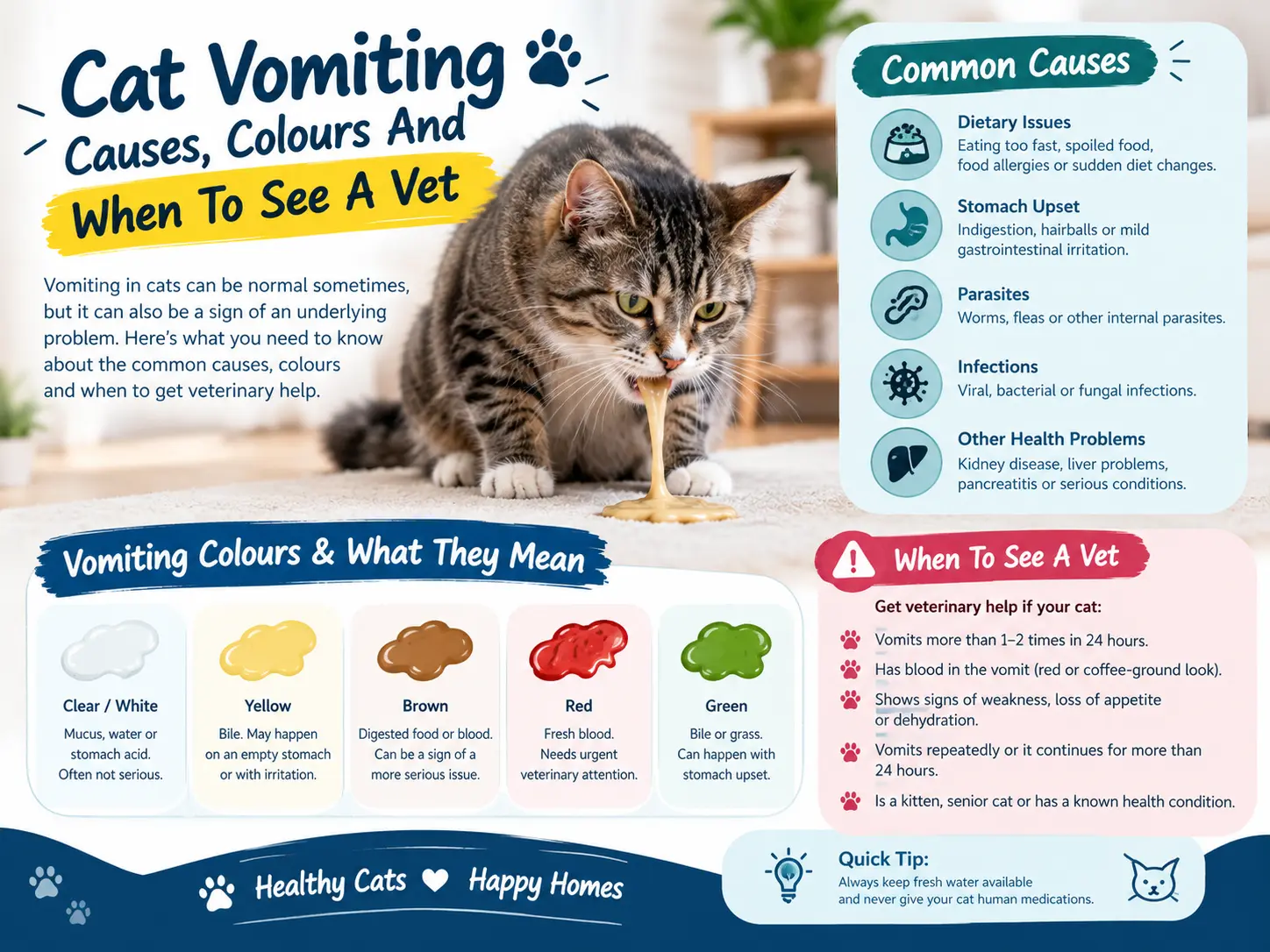
Nothing can be more stressful for a cat owner than having your cat vomit. Whether they're bringing up a hairball or just being sick violently, it can be scary to know if it's just a normal way of clearing their stomach or if it's a serious issue.
Cat vomiting is one of the most common reasons people take their pets to the vet. Whilst occasional vomiting isn't always a problem (especially if they're bringing up a hairball!) it can be a sign of something underlying if they regularly vomit. In this blog post we'll give you all the information about the causes of cat vomiting, what the colours mean and when to take your cat to the vets.
Vomiting Or Regurgitating?
It's important to understand the difference between vomiting and regurgitating.
VOMITING
This is an active process. Your cat will be sick with their stomach muscles moving, their abdominal muscles contracting and they may drool or cry. They'll often bring up partially digested food, along with yellow bile and/or foam.
REGURGITATING
This is an inactive process. Your cat may be eating too quickly and suddenly bring up their food. The food is usually in tubes and undigested.
If your cat is regurgitating it'll usually be because they've been eating too quickly or there is a problem with their oesophagus. Whereas if they're vomiting this is coming from their stomach or intestines and can be from lots of different issues.
Common Reasons Your Cat Will Vomit
There are many reasons why your cat may be vomiting. These can be split into three categories; dietary, infections and underlying medical issues.
1. Hairballs
Cats are very fastidious animals. When they groom themselves the little barbs on their tongues trap any loose hair which they then swallow. Most of this hair will pass through their digestive system but sometimes it can build up in their stomach and form a hairball.
- Appearance: Tubular hairball. Usually with vomit or bile.
- Note: If they're vomiting regularly (more than once a month) then you should take them to the vets as this can be a sign of underlying skin issues or stress causing them to over-groom.
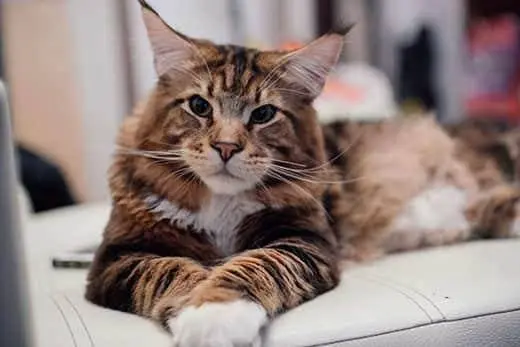
2. Eating Too Quickly
Some cats will eat really quickly. This can cause them to swallow lots of air which will cause their stomach to swell and trigger vomiting.
Try using a puzzle feeder or slow feeder bowl to make them eat slower.
3. Hairball Treats/Laxatives
Sometimes hairball pastes or laxatives can cause stomach upset if given in large quantities. Always follow the instructions on the packet.
4. Dietary Issues
Cats are curious and may chew on houseplants or eat food off the table. They may also swallow small items such as string, ribbons or rubber bands. Some human foods are toxic to cats such as onions, garlic, chocolate and grapes. They can also get food poisoning from eating spoiled food.
5. Parasites
If they have intestinal worms (such as roundworm or tapeworm) this can cause irritation in their gut leading to vomiting, diarrhoea and weight loss. They should be regularly dewormed.
6. Infections
They can suffer from viral infections such as Feline Panleukopenia (Feline Distemper) and Feline Coronavirus. They can also get bacterial infections in their stomach/intestines.
7. Underlying Medical Issues
If your cat is vomiting regularly over a long period of time it could be a sign of:
- Kidney Disease – Often cats with kidney disease will vomit as their blood becomes poisoned causing irritation to their stomach.
- Hyperthyroidism – Their thyroid is overactive causing their metabolism to speed up. This can cause vomiting and weight loss.
- Inflammatory Bowel Disease – Chronic inflammation of their digestive tract causing regular vomiting and diarrhoea.
- Pancreatitis – Inflammation of their pancreas. This can cause extreme pain and severe vomiting.
- Cancer – Tumours in their stomach or intestines can block their digestive tract.
8. Foreign Body (Blockage)
This can be a serious issue! If your cat swallows something such as string, toys or bones and it gets stuck in their intestines it can cause a blockage. This will cause them to vomit severely, become lethargic and have a painful tummy. If not treated this can be fatal.
What Does The Vomit Look Like?
The colour of your cat's vomit can tell you a lot. Here are some examples below.
- Clear/foamy – Usually means they're vomiting on an empty stomach. They're bringing up stomach acid and saliva. This is common if they haven't eaten for a while (acid reflux).
- Yellow – Bile! This is made in the liver and stored in the gall bladder. If they're bringing up yellow this often means they're vomiting on an empty stomach. However if it's regular it can be a sign of liver disease or IBD.
- White – Foamy white vomit is usually a sign of excess stomach acid or excess saliva. This is common with hairballs or if they haven't eaten for a while.
- Brown – Usually undigested or partially digested food. This is common if they've eaten too quickly or have a food intolerance. However if it smells like faeces it can be a sign of a serious blockage.
- Red/Pink – Blood! This can be bright red or look like coffee grounds (partially digested). This can be a sign of an ulcer in their stomach, something poisonous they've eaten or a foreign body causing damage to their stomach lining. This is an emergency so see your vet straight away.
- Green – This can be a sign they've eaten some grass (harmless!) or it can be bile mixed with food. If it's bright green and regular it can be a sign of a blockage or serious digestive issue.
Other Signs To Look Out For
Whilst vomiting may not be a big issue if they have other symptoms then it can be a red flag. Here are some symptoms to look out for:
- Lethargy – They're weak, unresponsive or hiding.
- No appetite – Not eating for longer than 24 hours.
- Diarrhoea – Especially if severe or with blood.
- Dehydration – Gently lift up the skin at the back of their neck. If it doesn't spring back quickly then they're dehydrated.
- Pain – Crying when you touch their tummy.
- Weight loss – Losing weight.
- Pale Gums – Pale, white or blue gums is an emergency.
When To See A Vet (Red Flags)
Always contact your vet if you're concerned. However if they experience any of the following then they should go to the vets straight away.
- Repeated vomiting – Vomiting more than once in a day or unable to keep water down.
- Blood – Any blood in the vomit.
- Vomiting + Lethargy – If they're not moving and vomiting this is an emergency.
- Possible poisoning – If you think they've eaten something poisonous (antifreeze, lilies, human medication etc).
- Possible blockage – If there is a string/object in their vomit or they're trying to vomit but nothing is coming up (ineffective vomiting).
What To Do If Your Cat Is Vomiting
If they're only vomiting once or twice and seem happy and playful then you can monitor them at home. Here's what to do:
- Withhold food – Fast them for 12-24 hours (never withhold water!). This will let their stomach settle.
- Hydrate – Ensure they have access to fresh water. You can also offer them an ice cube to lick or a small amount of unflavoured Pedialyte (always check with your vet first!).
- Easy food – Once they've finished fasting offer them a small amount of easy food (boiled chicken) or sensitive stomach food. Feed them small frequent meals.
- Monitor – Keep a close eye on them. If they vomit again or have other symptoms then call your vet.
How Vets Diagnose
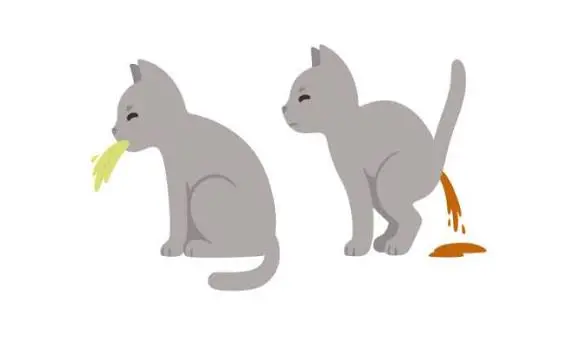
If you take your cat to the vets they will likely do a few tests to determine why they're vomiting.
- Physical examination – Feeling their tummy for any lumps, pain or blockages.
- Blood tests – To see how their organs (kidneys, liver, thyroid) are working and if they have any infections.
- Faecal sample – To check for any parasites.
- X-ray/ultrasound – To see if there are any foreign bodies, tumours or inflammation.
- Endoscopy – Sometimes they will place a small camera into their stomach to view the lining.
How To Prevent Your Cat From Vomiting
Whilst you can't prevent all vomiting you can greatly reduce the chances by doing the following.
- Brush regularly – Brush your cat daily to remove loose hair and prevent hairballs.
- Use a puzzle feeder – This will help them not to eat too quickly.
- Feed high quality food – Feed them high quality food specific to their species. Avoid cheap fillers and artificial ingredients.
- Hairball preventatives – Use hairball gels or special hairball food if they suffer from hairballs.
- Water fountain – Cats are prone to dehydration so offer them a water fountain.
- Keep toxic items away – Keep toxic plants, cleaning products and human medication away from them.
Conclusion
Occasional vomiting is normal however if they are vomiting regularly you shouldn't ignore it. By monitoring the colour of their vomit, any other symptoms and how often they're vomiting you can get an idea of whether it's a small issue or a vet emergency. If you're unsure always call your vet. Better to be safe than sorry!
FAQs
Related Articles
- Best Cats For Cat Allergies – Hypoallergenic Breeds
- How Long Do Cats Live? (And When Do They Stop Growing)
- How Long Are Cats Pregnant? Feline Gestation Guide
- Can Cats See in the Dark? Fun Cat Facts & Behavior