
How Long Do Cats Live? (And When Do Cats Stop Growing?)
📅 October 25, 2026 | ⏱️ 9 min read | 📂 Pet Care
If you are a cat owner then you will have likely asked yourself ‘how long do cats live?’ This is a somewhat sad topic as whilst you want to make the most of every moment with your cat you also want to prepare for the future.
Whether you have adopted a tiny kitten or you are looking after a senior cat knowing how long cats live on average can help. This guide will explain exactly how long cats live, the factors affecting how long cats live and answer ‘when do cats stop growing?’.
How Long Do Cats Live On Average?
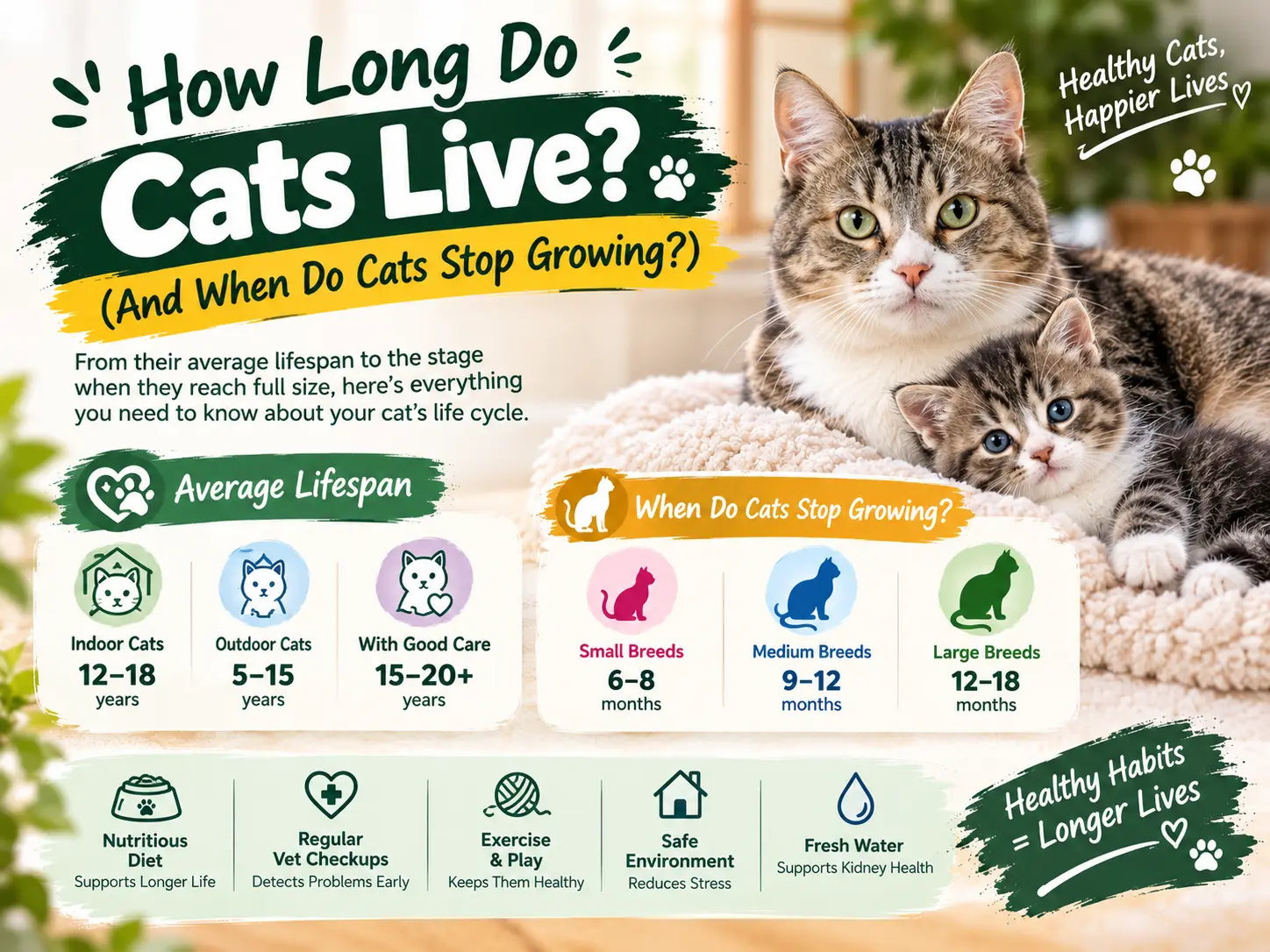
On average domestic cats live to be between 12 and 18 years. However, many well cared for cats live for 20+ years! The oldest cat ever recorded is Creme Puff who lived to be an amazing 38 years old.
Why such a big difference between indoor and outdoor cats?
Indoor & Outdoor Cat Lifespans
If you ask a vet how long cats live, they will rely on lifestyle.
- Indoor Cats – Indoor cats live much longer. On average 13-18 years, although many live for 20+. These cats are kept safe from extreme weather, car accidents, infection and other predators.
- Outdoor Cats – Cats who live exclusively outside have a much shorter lifespan. On average between 2-5 years. They are constantly in danger from vehicles, fighting, poisoning and extreme weather conditions.
- Indoor/Outdoor Cats – Cats who spend some of the time outside will tend to live for around 5-10 years.
What Affects How Long Cats Live?
Whilst genetics do play a role, how you care for your cat will affect how long they live. Below are some key reasons:
- Feeding – Feeding a high protein, species appropriate diet will keep your cat slim and reduce the risk of them becoming overweight.
- Vet Visits – Regular vet visits, vaccinations and worming will help. Getting diseases caught early, such as kidney disease and hyperthyroidism, will extend your cat’s life.
- Keeping Indoors – Keeping your cat indoors (or using a catio) will keep them safe from traffic and predators.
- Spaying/Neutering – Spayed/neutered cats will tend to live longer. They won’t roam, fight or get certain cancers.
- Mental Stimulation – Playing with your cat using toys and scratching posts will keep them active and reduce the risk of depression and weight gain.
Understanding How Long Cats Live
Cats age very quickly during their early stages. Understanding their life stages can help.
- Kitten (0-6 months) – Fast growing and lots of energy. Special kitten food and regular vet visits.
- Junior (6 months – 2 years) – Your cat will have reached their full adult size. They will be very active and curious.
- Adult (3-6 years) – This is where your cat will be in their prime. They will be more settled into their personality. They will need regular exercise.
- Mature (7-10 years) – Your cat will be entering their middle age. You will notice them slowing down a little. They should start getting yearly blood panels done.
- Senior (11-14 years) – Senior cats will need more rest. They can suffer from age related issues.
- Geriatric (15+ years) – Will need specialist care. Soft food and warm, comfy nap spots.
When Do Cats Stop Growing?
Many new kitten owners are shocked how quickly they grow into their full sized cat. When do they stop?
Generally most domestic cats will stop growing at 12 months old. However, this can depend on their breed and gender.
- Length – Most cats will be fully grown in length by 1 year old.
- Filling Out – Whilst their bones will stop growing at 1 year old, they will continue to ‘fill out’ and build muscle until they are 18-24 months old.
- Gender – Male cats will tend to be larger and grow for longer than female cats. Some males may continue to build muscle until 2 years old.

Do Large Breeds Grow For Longer?
Yes! Large breeds such as Maine Coons, Norwegian Forest Cats and Ragdolls will take much longer to grow. Many large breeds will continue to grow until they are 3-4 years old.
They will require high quality food to allow their bones and joints to grow. If you give them adult food too early they may grow too quickly and suffer from joint issues.
How To Work Out How Old Your Cat Is
If you have rescued your cat you may not know their exact age. Your vet can help work out their age based on their teeth, eyes and coat.
- Teeth – Kittens will lose their baby teeth at around 3-4 months. At 1 year old they will have lost all their baby teeth and will have a full set of white teeth. From 3-5 years old you may notice them starting to turn a little yellow. At 10+ years old their teeth may have worn down a lot, tartar or missing teeth.
- Eyes – Kittens will have bright clear eyes. Senior cats may have slight cloudiness to their lens (lenticular sclerosis).
- Coat – Kittens have very soft coats. As they get older their coat may thicken. Senior cats may struggle to groom and have matted fur.
How Old Is My Cat In Human Years?
You may have heard that 1 cat year is equal to 7 human years. This is a misconception! Cats age very quickly during their first 2 years.
- 1 Year – Equivalent to 15 years old.
- 2 Years – Equivalent to 24 years old.
After this they will age around 4 human years per year.
So a 10 year old cat is around 56 years old. A 15 year old cat is around 76 years old.
How To Help Your Cat Live Longer
If you want your cat to live to the upper end of ‘how long do cats live?’ (15-20 years) then you need to help them.
- Keep Slim – Obesity is the number one preventable issue in cats. It can cause diabetes and heart issues.
- Fresh Water – Cats are notoriously bad at drinking enough water. Providing a water fountain can help encourage them to drink more and reduce kidney issues.
- Regular Vet Visits – Visit your vet at least once a year. Senior cats (10+) should see the vet every 6 months.
- Dental Care – Brushing their teeth or using dental treats will help. Dental issues can cause heart and kidney issues.
- Play – Play with your cat daily. Using interactive toys will help keep their brain active.
Conclusion
Knowing how long cats live and when they stop growing will help prepare you for every stage of their life. Indoor cats can live up to 15-20 years. However, how you care for them daily, feeding and vet visits will have a massive impact. Make the most of every moment with your feline friend whether they are a crazy kitten or a chilled senior.
FAQs
Related Articles
- Best Cats For Cat Allergies – Hypoallergenic Breeds
- How Long Are Cats Pregnant? Feline Gestation Guide
- Cat Throwing Up: Causes, Symptoms & When to See a Vet
- Can Cats See in the Dark? Fun Cat Facts & Behavior