
Fun Cat Facts & Behaviour - Night Vision, Diet and Grey Tabby Cats
📅 October 25, 2026 | ⏱️ 10 min read | 📂 Pet Care
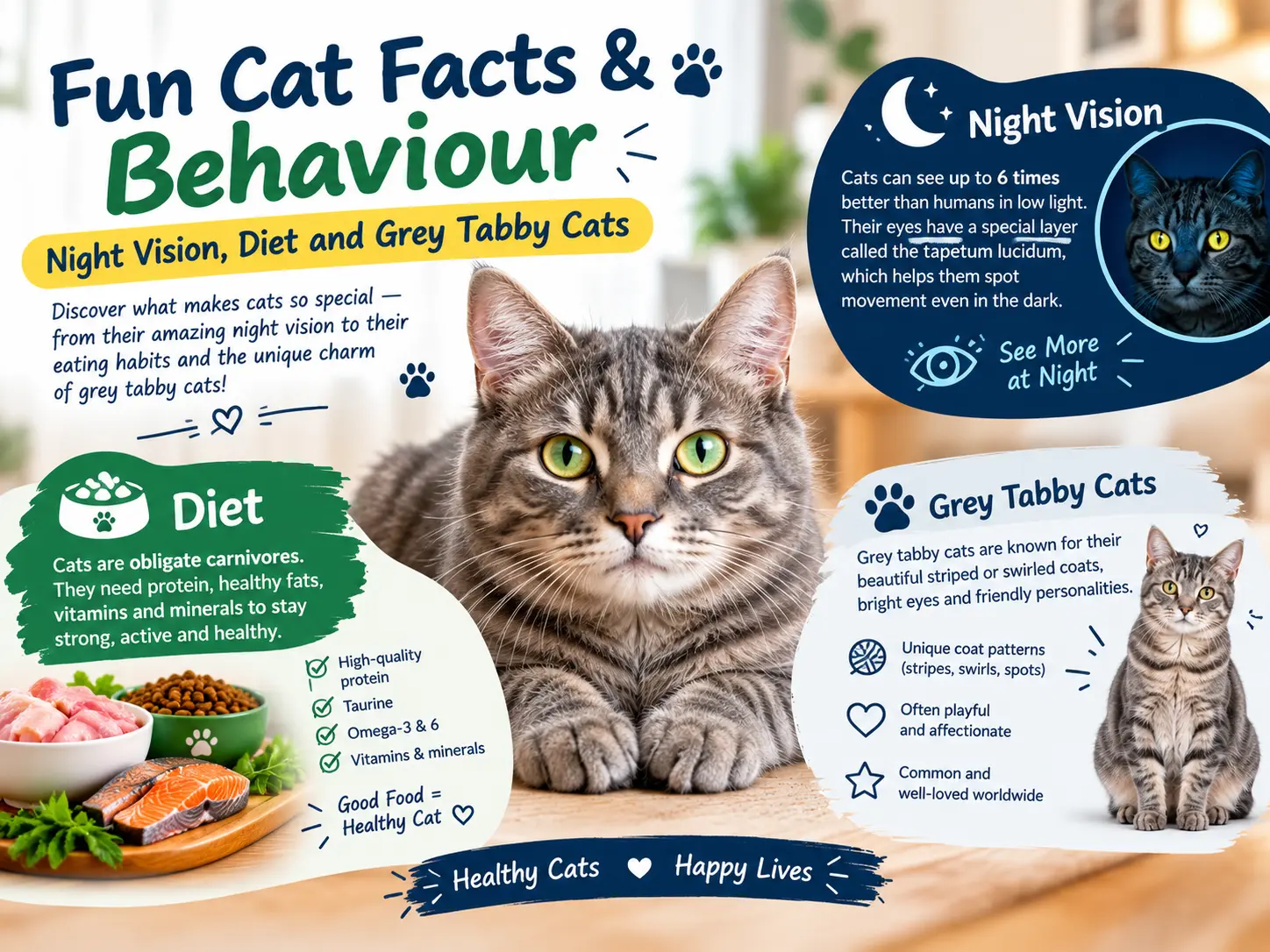
Cats are some of the most interesting creatures on the planet. Whether you're an experienced cat owner or you're just curious about cats, there's always something new to learn. Have you ever wondered if cats can see in the dark? Or maybe you've wondered if cats can eat cheese? What makes grey tabby cats so special?
In this blog we're going to go into detail about all the amazing fun cat facts and behaviours. We'll look at how cats have incredible night vision, what they can and can't eat and what makes grey tabby cats so special. We'll help you know the difference between fact and fiction.
Part 1: Can Cats See in the Dark?
Have you ever noticed your cat zooming around the house at 3am or staring intently at a dark corner? You may be wondering if cats can see in the dark!
Short Answer: No, cats can't see in total darkness. However, they have incredible night vision. Humans need light to see, but cats only need 1/6th of the light we need to see.
Science Behind a Cat's Night Vision
Cats are incredible night hunters thanks to certain elements of their eyes.
- Tapetum Lucidum: This is a layer of reflective tissue behind the retina. Light enters the eye and hits the retina. The light then reflects off the tapetum lucidum, which means the retina gets a second chance to absorb the light. This is why cats' eyes glow green or yellow in the dark.
- Large Pupil: Cats' pupils can open up to be very large.
- More Rods: Cats' retinas have a lot more rods (photoreceptors for light and movement) than cones (photoreceptors for colour). This makes them sensitive to movement in the dark.
What about Colour?
Although cats are incredible hunters at night, their vision isn't as clear during the day as humans. As they have fewer cones than humans they are slightly colour blind. They can see mainly shades of blue and yellow. They struggle to tell the difference between red and green, similar to humans being colourblind. However, they are incredible at seeing movement!
Do they have a Third Eyelid?
Yes! Cats do have a third eyelid called the palpebra tertia. It is in the inner corner of the eye and helps protect the eye, spread tears and remove debris. You often see it when they're relaxed or when they're ill.
Part 2: Can Cats Eat Cheese?
We all love treating our pets every now and then. If your cat is staring at you whilst you're eating a sandwich you may be wondering can cats eat cheese?
Answer: Yes, technically they can. But it's not recommended.
Why Cheese is Not Recommended
There are a few reasons why you shouldn't feed your cat cheese.
- Lactose Intolerance: Most adult cats are lactose intolerant. Lactose intolerance means they don't have the right enzyme (lactase) to break down the sugar (lactose) found in dairy. This can cause them to suffer from an upset tummy, vomiting, diarrhoea and stomach pain.
- High in Fat: Cheese is high in fat. Cats do need some fat in their diet. However, they can suffer from obesity if they eat too much of the wrong type of fat.
- High in Sodium: Many cheeses are very high in salt. This can cause pressure on their kidneys and could cause kidney disease.
- Toxic: Plain cheese isn't toxic. However, some cheeses contain toxic additives. Cheese filled with onions, garlic and chives is extremely toxic.
Safer Treats
The safest way to treat your cat is to feed them their usual balanced diet. However, if you really want to give them a special treat try...
- A small piece of plain cooked chicken.
- A small piece of cooked fish (Salmon)
- A very small piece of plain boiled egg.
Can Cats Eat Other Human Food?
Just like cheese, many human foods aren't safe for cats. Here are some of the most common ones to avoid.
- Chocolate, Coffee & Caffeine: Highly toxic. Can cause seizures and heart issues.
- Onions, Garlic, Chives & Leeks: Harm their red blood cells.
- Grapes & Raisins: Can cause sudden kidney failure.
- Alcohol: Extremely dangerous.
- Raw Dough: Can swell in their stomach and create alcohol.
Part 3: Grey Tabby Cats
We've talked about their night vision and diet, but let's talk about their appearance. If you're a cat lover you'll have definitely seen a grey tabby cat. But what is a grey tabby?
There is a common misconception that tabby is a breed. This isn't true. Tabby refers to a specific coat pattern. You can find tabby patterns on Persian cats, Maine Coons, Domestic Shorthair and many other breeds.
Grey Tabby Coat Pattern
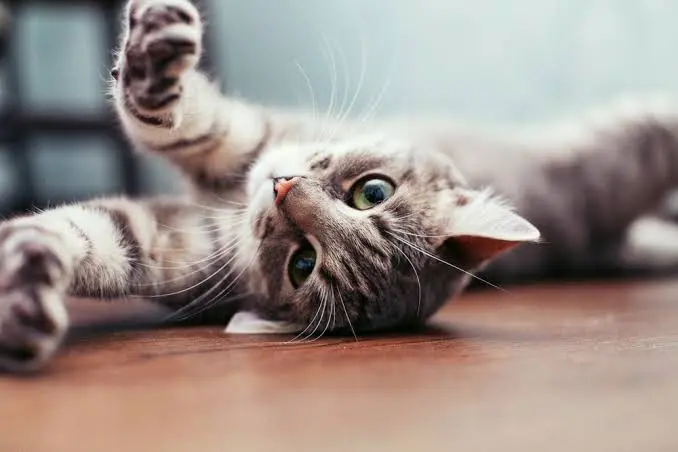
A grey tabby is a cat with a grey base coat and tabby pattern. The tabby pattern can come in a few different patterns.
- Classic Tabby: These cats have a broad swirling pattern down their sides. They usually have a dark stripe down their back and butterfly pattern on their shoulders. They also have an 'M' pattern on their forehead.
- Mackerel Tabby: This is the most common pattern. They have vertical stripes down their sides. The stripes resemble the bones of a fish. They also have an 'M' pattern on their forehead.
- Spotted Tabby: These cats don't have stripes, they have spots down their sides. They look like a wildcat (Leopard).
- Ticked Tabby: This pattern is common in Abyssinian cats. Instead of stripes or spots, they have bands of colour (ticking) on each hair. This creates a sandy shimmer.
Personality of a Tabby Cat
There is no set personality for a tabby cat. However, many people believe the 'M' on their forehead stands for Majestic or Magnificent. In reality it's a genetic trait passed down from their African wildcat ancestor.
Grey tabby cats are generally known for being:
- Intelligent: They are great problem solvers.
- Active: They love to play and hunt.
- Affectionate: They bond well with their owners.
- Curious: They love to explore.
Are Grey Tabby Cats Rare?
Grey tabby cats are not rare. In fact they are one of the most common coat colours in the world. However, due to their amazing silver coats and dark stripes they are very popular and loved.
Conclusion
Cats are incredible creatures with amazing night vision, specific diets and amazing coat patterns. Knowing whether cats can see in the dark helps us appreciate how perfectly evolved they are. Knowing whether cats can eat cheese and choosing better treats helps keep them healthy. Learning about grey tabby cats helps us appreciate how beautiful and diverse the feline world is.
FAQs
Related Articles
- Best Cats For Cat Allergies – Hypoallergenic Breeds
- How Long Do Cats Live? (And When Do They Stop Growing)
- How Long Are Cats Pregnant? Feline Gestation Guide
- Cat Vomiting – Causes, Colours & When To See A Vet