
How Long Are Cats Pregnant? (Feline Pregnancy Guide)
📅 October 25, 2026 | ⏱️ 9 min read | 📂 Pet Care
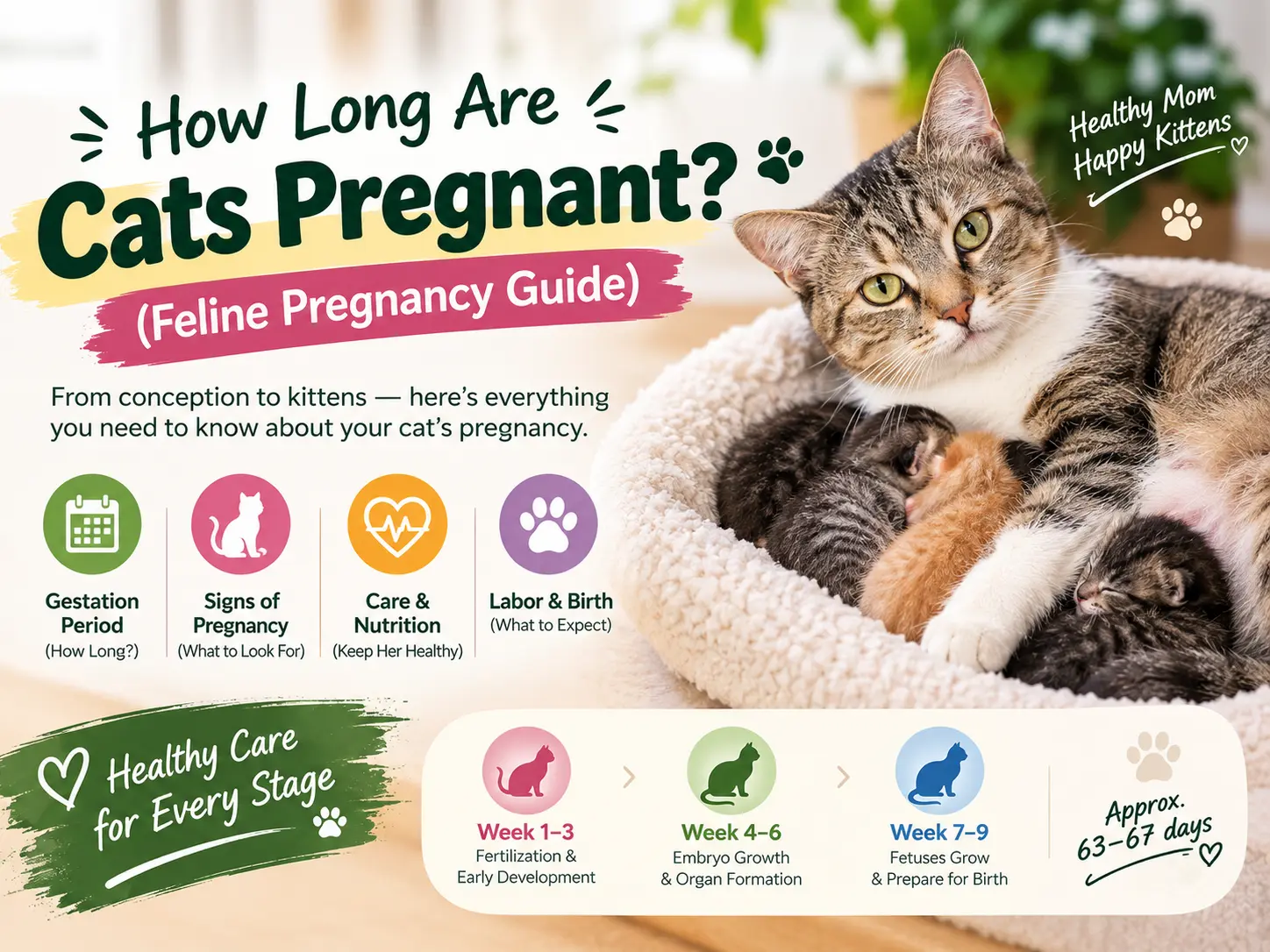
Discovering your cat is pregnant can be an exciting but nerve-racking time. Whether you're an experienced breeder or a new pet owner who has found a stray cat has moved into your garage, you'll probably be wondering how long are cats pregnant?
Knowing how long cats are pregnant for is essential. This will allow you to prepare for the birth, change how you look after your cat and ensure your queen, and kittens stay as healthy as possible. We've put together this guide to show you how long cats are pregnant for, plus the stages of pregnancy, symptoms to look for and how to care for your pregnant cat.
How Long Are Cats Pregnant? (Exact Timeframe)
On average cats are pregnant for 63-65 days (approximately nine weeks).
However, this can vary. All cats can deliver their kittens between 61-72 days after conception.
- Under 60 days: If your cat delivers her kittens before 60 days, they will be considered premature. They will likely require immediate veterinary attention to survive.
- Over 72 days: If your cat hasn't gone into labour by 72 days, this can be a cause for concern. Contact your vet asap as something could be wrong with the pregnancy or the due date was miscalculated.
As this can be quite a large window, it's a good idea to know the exact date your cat mated. If you don't know when your cat mated, your vet can use an ultrasound to confirm your cat is pregnant around day 21.
Stages Of Pregnancy
A cat's pregnancy can be broken into three different trimesters.
Trimester 1 (Weeks 1-3)
In the first few weeks it can be very hard to tell if your cat is pregnant. The fertilised eggs will travel through the fallopian tubes and into the uterus.
Symptoms you may notice:
- Appetite may decrease slightly.
- Nipples become slightly pinker (often referred to as pinking up).
- May become more affectionate or want to be left alone.
- Day 21/25: Take your cat to the vet. An ultrasound can confirm she's pregnant.
Trimester 2 (Weeks 4-6)
During this time you will notice physical changes. The kittens are growing quickly and the queen's stomach will begin to grow.
Changes you will notice:
- Weight gain.
- Appetite will increase. As the kittens are growing they will require more calories. Change your cat to high quality kitten food.
- Abdomen will start to look bigger. By week 5/6 you may notice her tummy looks swollen.
- Nesting behaviours. She may look for a quiet, dark and safe place to have her kittens.
Trimester 3 (Weeks 7-9)
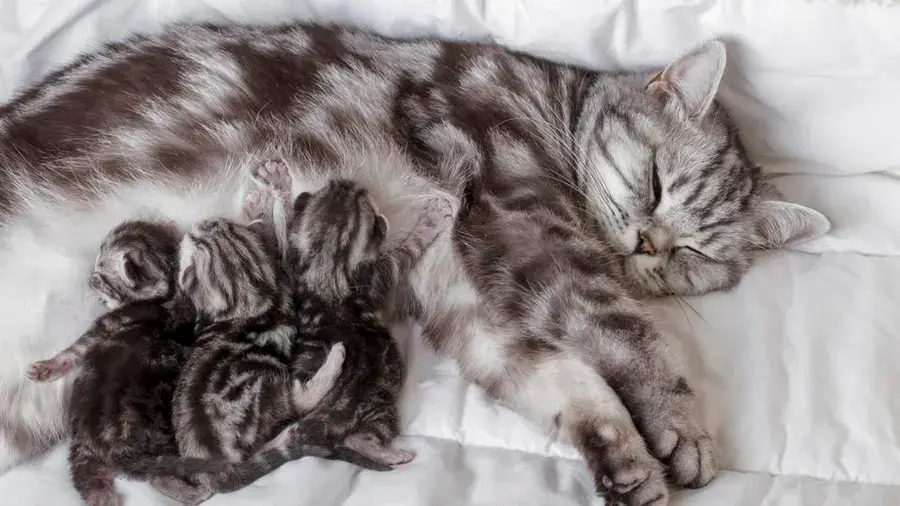
This is the last stage of pregnancy. The kittens have fully developed and are gaining fat. The queen will be very large and may become restless.
You may notice:
- Visible movement of kittens.
- Around week 8/9 she may begin to produce milk. Her mammary glands will swell.
- She may become restless. She may pace, over-groom and refuse to leave your side.
- Get a whelping box ready. This is a nesting box. Get a quiet and warm room ready.
Labour Signs
As your cat reaches her 63-65 days you need to be attentive of labour signs. Cats often go through three stages of labour.
Stage 1 (Early Labour)
This can last between 2-12 hours.
- Your cat will become very restless. She may pace and pant.
- She will over-groom her genital area.
- She may refuse to eat.
- She may hide in her nesting box.
- She may have a clear or slightly blood stained discharge from her vulva.
Stage 2 (Labour)
This is when your cat will give birth to her kittens.
- She will have strong contractions in her stomach.
- She may cry or purr loudly.
- A small water sack may appear and pop.
- The first kitten is usually born within 30 minutes of pushing.
- Once the kitten is born the mother will pop the sack, clean the kitten and chew off the umbilical cord. She will likely eat the placenta. This is completely fine and will give her nutrients.
Stage 3 (Placentas)
Once each kitten is born the placenta (afterbirth) will come out. There can be up to 15 minutes between each kitten.
How long will labour take?
Labour can last between 2-24 hours. It is completely normal for your cat to take a break between each kitten and could last up to an hour. However, if your cat is straining and hasn't produced a kitten after an hour, contact your vet.
Potential Issues During Birth
Most cats don't have any problems during birth. However, there could be some emergencies. If you notice any of these signs contact your vet.
- Dystocia: This means difficult birth. If your cat is straining for more than an hour and hasn't produced a kitten there could be a kitten stuck in the birth canal.
- Kitten stuck half way: If a kitten is stuck half way out and the mother can't push it out you may need to gently help (if told to by a vet) or take her to the clinic.
- Over 2 hours between kittens: If the mother looks calm and isn't straining it may just be a break. However, if they are straining and no kitten comes seek help.
- Green discharge: A little green discharge can be normal but lots of discharge or a smell can mean there is an infection or the placenta has detached.
How To Look After Your Pregnant Cat
Looking after your queen will require a bit more effort. Here are some tips to help:
1. Food
Don't feed your cat adult food. From week 4 change to kitten food. Kitten food is full of extra protein, calcium and calories to help with the kittens. By the time she has her kittens she may be eating 1.5-2 times her usual amount.
2. Vet Visit
Take your cat to the vets for a wellness check. They can confirm she is pregnant, check for parasites and inform you about any vaccinations or deworming.
3. Whelping Box
Around 2 weeks before her due date get a quiet and warm area set up. Get a large cardboard box and make a door on the side. Line with clean towels or puppy pads. Place somewhere quiet, away from other pets and loud noises.
4. Don't Handle Too Much
It's okay to stroke your cat but don't pick her up or touch her tummy too much. Especially in the third trimester.
5. Keep Indoors
Your cat must be kept strictly indoors whilst pregnant. They are very vulnerable to accidents, predators and diseases. If they give birth outside the kittens will be extremely vulnerable.
What To Do Once Kittens Are Born
Once the kittens are born the mother will do most of the work. Just make sure the area is warm (the kittens can't regulate their body temperature for a few weeks) and the mother has food.
- Don't touch the kittens for the first week. Unless the mother is ignoring them.
- Make sure the mother has plenty of fresh water. Place near the nesting box.
- Check all the kittens are feeding. If a kitten is constantly crying and not gaining weight they may not be getting enough milk.
Conclusion
Knowing how long cats are pregnant for (around 63-65 days) will help you prepare. By keeping an eye on her health, feeding her nutritious food and providing a safe nesting area you can help make the process as smooth as possible. If you ever think something is wrong don't be afraid to contact your vet.
FAQs
Related Articles
- Best Cats For Cat Allergies – Hypoallergenic Breeds
- How Long Do Cats Live? (And When Do They Stop Growing)
- Cat Throwing Up: Causes, Symptoms & When to See a Vet
- Can Cats See in the Dark? Fun Cat Facts & Behavior