
Weight Converter: lbs to kg
Easily convert pounds to kilograms or kilograms to pounds with our free online converter. Convert 152 pounds kg, 162 lbs to kg or any other weight with this quick and accurate tool.
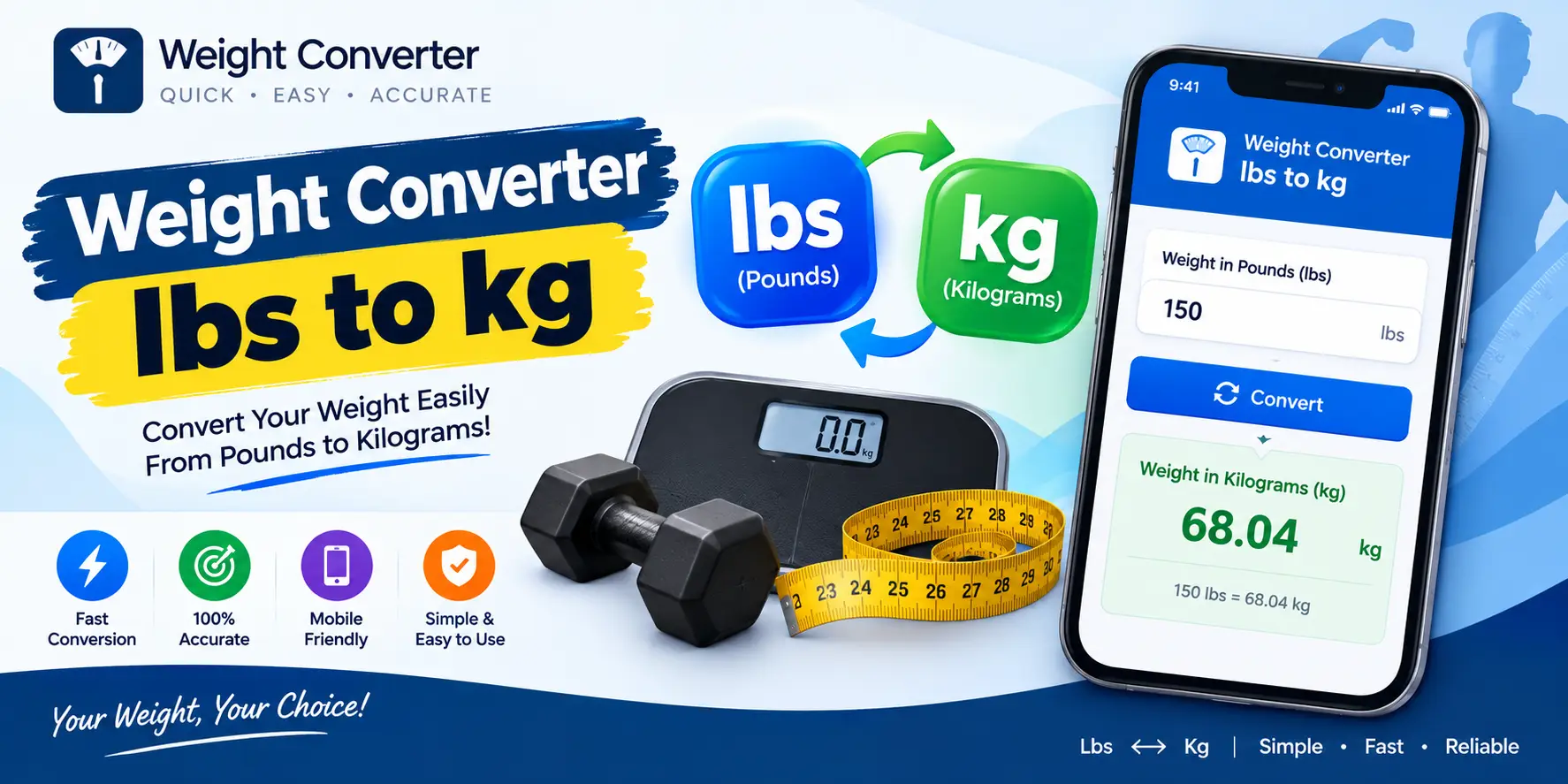
Conversion Result
Why Do I Need a Weight Converter?
A weight converter is a simple but incredibly useful tool for anyone who needs to convert weights between pounds (lbs) and kilograms (kg). Whether you want to follow an international fitness program or understand the weight of a package being shipped to you, a weight converter is the perfect tool. Our lbs to kg weight converter can instantly convert any weight you enter.
In the United States of America, we measure weights in pounds. However, the rest of the world mainly measures weights in kilograms. It can sometimes be confusing when trying to follow a fitness program that uses a different unit of measurement. Having a quick and easy lbs to kg converter can help avoid any mix-ups.
How to Use the Converter
Using the tool is very simple - just follow these easy steps:
- Select the conversion type: Choose either "Pounds (lbs) → Kilograms (kg)" or "Kilograms (kg) → Pounds (lbs)" .
- Enter the weight: Enter the weight that you would like to be converted. For example, if you wanted to know 152 pounds kg, you would type 152 into the text box.
- Click Convert: Click the Convert button beneath the conversion type you selected and the results will show below.
- View the result: Not only does the converter tell you the converted weight, it also shows you the conversion factor for your reference.
Popular lbs to kg Conversions
Below are some popular lbs to kg conversions in a handy chart:
| Pounds (lbs) | Kilograms (kg) |
|---|---|
| 80 kg to lbs | 176.37 lbs |
| kilos to pounds | 2.20462 lbs |
| 60 kg to lbs | 132.28 lbs |
| 50cm in inches | 19.685 inches |
| 60kg to lbs | 132.28 lbs |
| 65 kg to lbs | 143.30 lbs |
| 70kg to lbs | 154.32 lbs |
| 160 kg en lbs | 352.74 lbs |
| 60 kg to pounds | 132.28 lbs |
| 60 kilos in pounds | 132.28 lbs |
| 70 kilo lbs | 154.32 lbs |
| 80 kilos in pounds | 176.37 lbs |
| 10kg to pounds | 22.05 lbs |
| 110 pounds en kilos | 49.90 kg |
| 130 kg en lbs | 286.60 lbs |
| 80kg to lbs | 176.37 lbs |
| 165 lbs kilo | 74.84 kg |
| 165 lbs to kg | 74.84 kg |
| 40 kg to lbs | 88.18 lbs |
| 45 kg to lbs | 99.21 lbs |
| 62 kilograms into pounds | 136.69 lbs |
| 72 kg to lbs | 158.73 lbs |
lbs to kg Formula Explained
The lbs to kg formula works in a very simple way:
1 pound (lb) = 0.453592 kilograms (kg)
To convert lbs to kg, you simply need to multiply the lb value by 0.453592. Here is an example of a lbs to kg conversion:
152 × 0.453592 = 68.95 kg
Alternatively, to convert kg to lbs you need to multiply the kg value by 2.20462:
68.95 × 2.20462 = 152 lbs
Why Is It Useful to Know My Weight in Both Lbs and Kg?
There are a number of reasons it is useful to know both your lbs and kg weight:
- International Travel: When you travel internationally you are likely to come across kg weights. Knowing your weight in kg can help you when buying things or filling up suitcases. If you have a weight allowance, knowing your weight in kg will ensure you do not end up paying an extra fee for going over.
- Fitness Programs: Many fitness programs and apps are used internationally and therefore use kg weights. Being able to understand your weight in kg can help you follow any international fitness program.
- Medical: Understanding your weight in both lbs and kg can be useful when it comes to medical needs. Different countries can use a different system of weights. As such, understanding your weight in both units can be helpful in the medical setting.
- Online Shopping: When shopping online it may be useful to know your weight in kg. Some shops use different measurements for their goods when selling outside of their home country.
Other Weight Conversions
The most common weight conversion is lbs to kg, but there are other weight conversions that can be useful;
- Pounds to Ounces: 1 lb = 16 oz
- Kilograms to Grams: 1 kg = 1000 g
- Stone to Pounds: 1 stone = 14 lbs (used in the UK and Ireland)
- Metric Tons to Kilograms: 1 ton = 1000 kg
Our weight converter only measures lbs to kg and kg to lbs, but there are many other weight converters online that offer more conversions.
The History of the Pound and Kilogram
The history of the pound and the kilogram are fascinating - if you're a history buff, you might enjoy it! The origin of the pound comes from the Roman libra as a measure of weight. Hence, why the abbreviation is 'lb' and not 'p'. The history of the kilogram is much more modern. The kilogram was first defined in 1795 in France, as the volume of water in a liter. The metric system is now used worldwide (by everyone except the US), and the kilogram is the metric unit of weight. The pound still primarily remains the unit of measurement used in the US.
What is the conversion factor?
You may be wondering why the number is 0.453592 and not something simpler or rounder. It is because the international avoirdupois pound is defined as exactly 0.45359237 kilograms. We have taken this number and rounded it to 0.453592 (eight decimal places!) for you. You don't need to worry about using the full number for our converter.
The Stone Weight Conversion - A British Quirk
If you are British or Irish, you may be used to hearing weights in 'stone'. This is a British measurement specific to their system of weights. 1 stone = 14 lbs. For example, someone weighing 152 lbs would also be weighing 10 stone 12lbs (10st 12lbs). The rest of the world doesn't tend to use this form of measurement - it is a British quirk. If you need to convert your weight to stone, simply divide your weight in pounds by 14.
Why Do Bodybuilders Need to Know This?
In the world of bodybuilding, it is really important to know how to convert lbs to kg and kg to lbs. Powerlifting has a strict set of requirements for a competition. This includes categories that are based in weight. For example, a common category is the 74 kg (163 lb) class. As a lifter, it is important to know exactly what weight category you fall into. It can be extremely difficult to know if you have gained that little bit of extra weight to move up to the next category. It can be the difference between a 2nd and a 3rd place.