
Saturated vs Unsaturated Fats: What's the Difference?
📅 January 1, 2026 | ⏱️ 10 min read | 📂 Nutrition
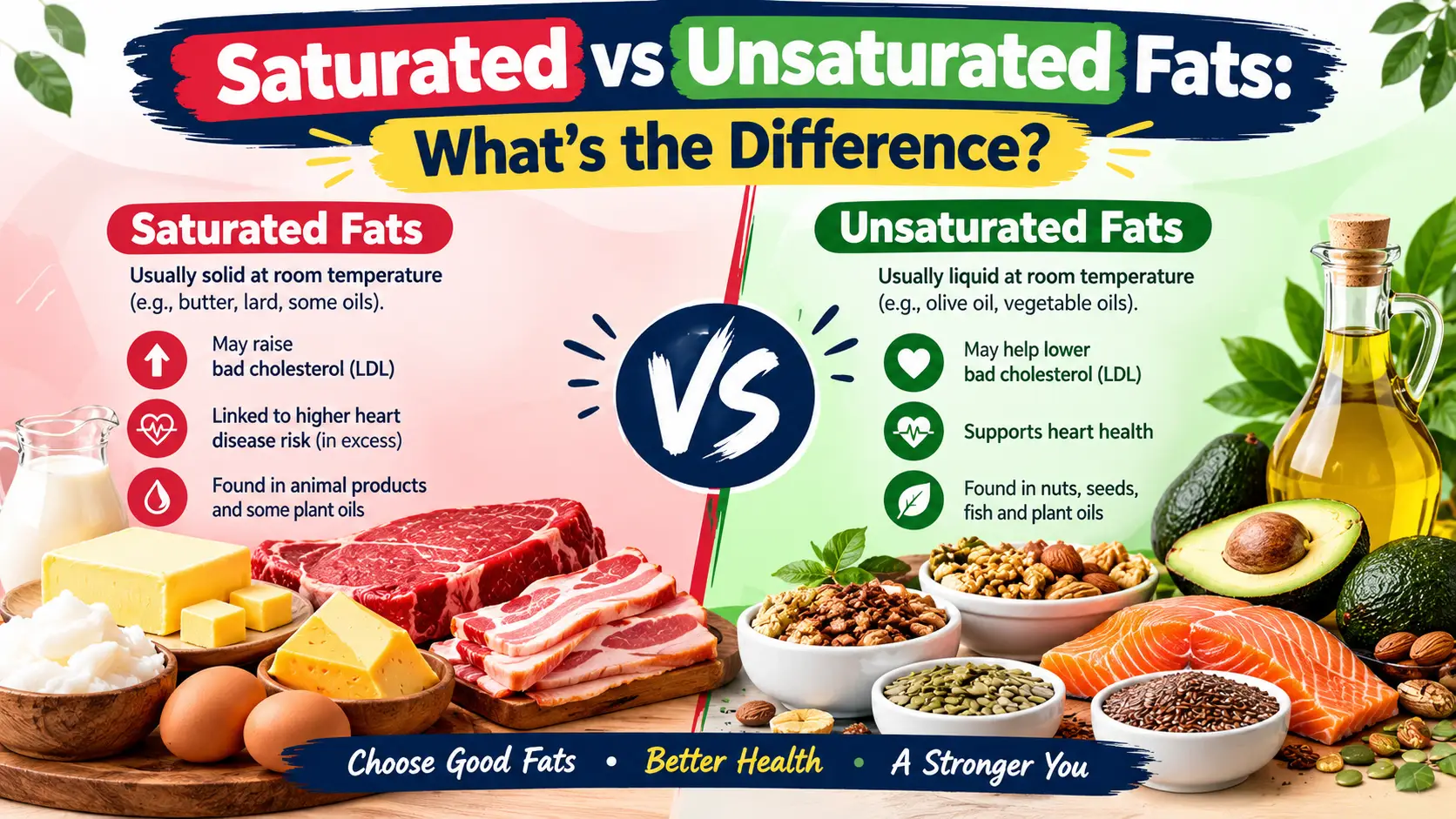
Saturated vs unsaturated fats is a hotly debated topic in nutrition. Are butter and olive oil healthy? Is coconut oil good or bad for us? The thing is, not all fats are created equal. Some of them are essential while others raise the risk of heart diseases. In this article we will discuss the pros and cons of each type of fats. Learn how to eat healthily.
What Are Fats?
Fats are one of the three macronutrients along with carbohydrates and proteins. Our bodies need fat to function properly:
- It serves as an energy source: 1 gram of fat gives you 9 calories compared to 4 calories from carbs and protein.
- Hormones are produced from fat. Testosterone, estrogen and other sex hormones belong to this group.
- Fats help your body absorb vitamins A, D, E and K.
- They insulate your organs and help keep a body temperature.
However not all fats are beneficial – it's their chemical structure that defines their impact on the body. There are two types of fats – saturated and unsaturated.
What Are Saturated Fats?
Saturated fats are called "saturated" because their molecules contain single bonds. Fats with bonds have a consistent structure and are typically solid at room temperature. The foods highest in fats include:
- Butter, ghee and lard
- Beef, lamb, pork and other red meats
- Poultry with the skin
- Full-fat milk, cheese and yogurt
- Coconut oil, palm oil and butter
- Processed meat products, such as sausages, bacon and luncheon meat
- Baked desserts and savory snacks
The Impact of Saturated Fats on Health
For decades scientists believed that saturated fats were unhealthy because they raised cholesterol levels increasing the risk of cardiovascular diseases. However that belief is beginning to change as researchers continue to study the effects of fat on the body.
Some studies have found that replacing fats with unsaturated ones can reduce the risk of cardiovascular disease. That being said, each type of saturated fat affects the body differently.
For example cheese and yogurt contain saturated fats and are associated with reduced cardiovascular disease risk. On the other hand eating too much red meat and processed meat products can increase the risk of cardiovascular diseases and certain cancers.
The American Heart Association recommends eating less than 6% of your calories per day as saturated fat. Consuming 2000 calories per day you should limit your saturated fat intake to 13 grams or fewer.
What Are Unsaturated Fats?
Unsaturated fats are further split into two categories: monounsaturated and polyunsaturated. Molecules of these types of fats have hydrogen atoms compared to saturated types. This makes them healthier and liquid at room temperature.
Foods containing unsaturated fats include:
- Olive oil and olives
- Avocados
- Nuts like almonds, cashews and peanuts
- Peanut butter
- Sesame, pumpkin and other seeds
Monounsaturated fats are most often found in Mediterranean diets. They are healthy because they decrease the cholesterol levels in the blood and increase the good cholesterol. A diet rich in mono- and polyunsaturated fats seems to benefit the system the most.
Polyunsaturated fats are another type of fat. Like fats polyunsaturated fats are healthy for your body.
They contain a chemical element called omega-3 which helps prevent diseases and reduces inflammation in the body. Foods containing polyunsaturated fats include:
- Mackerel, salmon, sardines and trout
- Flax and chia seeds
- Sunflower, soy and corn oils
- Tofu and soybeans
Saturated vs. Unsaturated Fats
| Feature | Saturated Fats | Unsaturated Fats |
|---|---|---|
| Chemical properties | No double bonds between carbon molecules | One or more double bonds between carbon molecules |
| Sources of occurrence | Butter, coconut oil, meat and dairy | Olive oil, avocados, nuts and fish |
| Impact on LDL cholesterol levels | Increases LDL levels in the blood | Decreases LDL levels in the blood |
| Risk of cardiovascular diseases | High level of intake increases the risk | Regular intake decreases the risk |
| Recommended daily amount | Less than 6% of daily calories (or 13 g/day) | Should replace saturated fats in the diet |
The Bottom Line About Healthy Fats
Based on everything discussed above we can conclude that unsaturated fats are the beneficial for our bodies. They are decreasing cholesterol levels and help prevent cardiovascular diseases. As for saturated fats it is better to limit their consumption as much as possible.
How to Incorporate Good Fats Into the Diet
To add unsaturated fats to your diet use olive oil instead of other vegetable oils, eat more nuts and avocados and try eating fish at least two times per week. When possible replace butter with oil or avocado oil.
You may also want to eat whole grains and legumes to obtain a regular supply of healthy fats. If you are a gym- and diet-tracker you might want to use our Calorie Calculator to monitor your caloric intake. You can also estimate your body percentage with our Army Body Fat Calculator.
Fats Health Myths
There are different myths about the health effects of fats. Let's try dispelling some of them:
- Myth: Fat makes you fat. Truth: Eating fats than your body needs makes you gain weight regardless of whether it is unsaturated or saturated fat.
- Myth: I should not eat any saturated fats. Truth: You should not eat a lot of saturated fats. Eating them occasionally is not dangerous for your health.
- Myth: Low-fat food is healthy. Truth: Low-fat products usually contain sugar to improve their flavor. Therefore they can be unhealthy for your body.
- Myth: I should not eat avocados or nuts because they are high in fat. Truth: These are fats and contain good cholesterol.
The History of the "Low-Fat" Diet Trend
In the 1950's and 1960's a scientist named Ancel Keys developed the "Diet-Heart Hypothesis" which states that saturated fat and cholesterol cause diseases. The "fat" diet trend began in the 1980's and continued into the 1990's. Keys' theory was so influential that many food manufacturers started listing the amounts of fat and cholesterol in food packaging. It also made people start consuming low-fat diet products.
However the "fat" trend did not make people healthier – the obesity rate rose steeply during that time as well. The truth is that there are factors that influence our health. Although low-fat foods were not helpful for a majority of people eating trans fats regularly was dangerous.
Good vs. Bad Cholesterol
LDL cholesterol is commonly known as cholesterol. It narrows arteries. Contributes to developing cardiovascular diseases and strokes. On the other hand HDL cholesterol or good cholesterol helps keep arteries elastic and prevents the formation of cholesterol plaques.
The Omega-3 to Omega-6 Ratio
Omega-3 and omega-6 fatty acids are polyunsaturated fats. Your body does not produce either of them on its own so you have to consume them both through food. Both acids are essential for reducing inflammation. They affect the body in two completely different ways.
Omega-3's help reduce inflammation and omega-6's promote it. Ideally the ratio of omega-6 to omega-3 should be 1:1 in our bodies. The fact that it is 15:1 or even 20:1 now is one of the reasons why people suffer from diseases nowadays.
How to Read Food Labels
You can read food labels to check for saturated, trans and unsaturated fat content. Below are some things to remember when reading the food label:
- Saturated fats: The American Heart Association recommends limiting saturated fats to 13 grams per day. It is best to reduce the amount of saturated fat in your diet.
- Trans fats: This type of fat is very dangerous because it increases cholesterol levels and decreases good cholesterol levels. A "hydrogenated oil" means the product contains trans fat.
- Monounsaturated and polyunsaturated fats: The amount of mono- and polyunsaturated fats are not listed in a food label. These types of fats generally make up the remaining fats after saturated and trans fats are removed.
Healthy Oils for Cooking
Oils have a risk of becoming burnt when exposed to heat. That is why many oils are unsuitable for cooking. We compiled a list of oils with the smoke point:
- Extra virgin olive oil: The smoke point of extra virgin olive oil is around 315 degrees Fahrenheit. This oil is best suited for low-temperature cooking. Making salad dressings. It is high in mono-unsaturated fats making it ideal for a heart- diet.
- Avocado oil: The smoke point of oil is as high as 500 degrees Fahrenheit. This oil contains an amount of monounsaturated fats, which are good for your health.
- Coconut oil: It has a smoke point making it suitable for any cooking. Coconut oil has a percentage of saturated fat – it can be dangerous for your health in big amounts.
- Ghee: These are also good for high-temperature cooking. They have too much saturated fat.
- Vegetable or canola oil: Vegetable and canola oils have a smoke point making them suitable for any cooking methods. However they have much polyunsaturated fat making them unhealthy. We recommend avoiding products that have been fried with them.
Frequently Asked Questions About Fats
Related Tools
Related Articles
- Does Muscle Weigh More Than Fat?
- The Five Food Groups: A Complete Guide
- calcium adjusted calculator guide