
Five Food Groups: A Complete Guide to Balanced Nutrition
📅 January 1 2026 | ⏱️ 8 min read | 📂 Nutrition
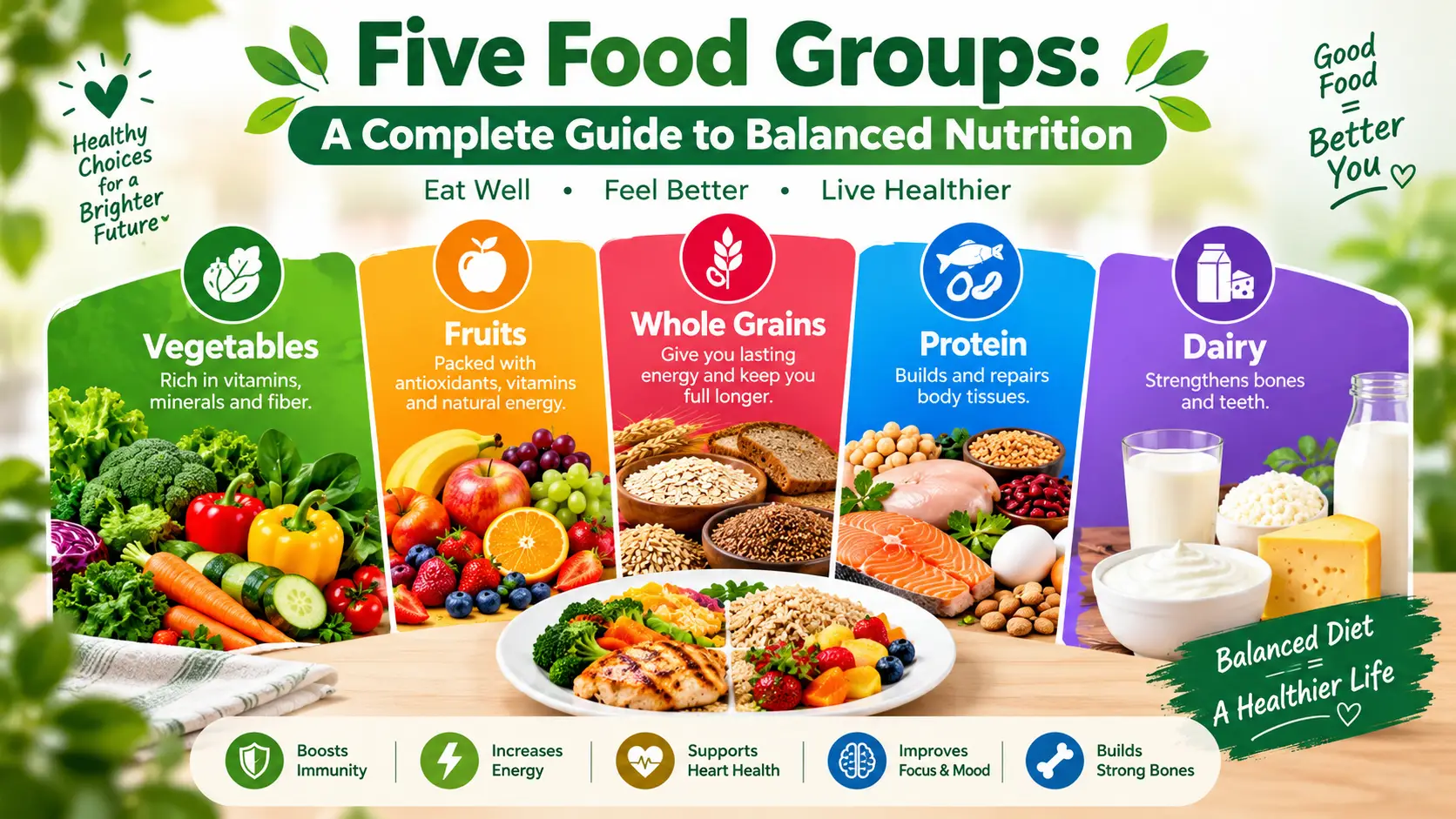
Eating a diet is one of the most important things you can do for your health.. What does "balanced" actually mean? The Five Food Groups give a framework to make sure you get all the nutrients your body needs. In this guide I explain what Five Food Groups are, why they matter and how to add them into your meals for best health.
What Are the Five Food Groups?
The five food groups are categories of foods that share nutritional properties. They are:
- Fruits
- Vegetables
- Grains
- Protein Foods
- Dairy (and Dairy Alternatives)
Each group gives a set of nutrients that are essential for good health. By eating a variety of foods from all Five Food Groups you can make sure your body gets everything it needs to work
1. Fruits
Fruits contain vitamins, minerals, fiber and antioxidants. They are naturally sweet. Can satisfy your sugar cravings while giving health benefits. Some examples are:
- Apples bananas oranges
- Berries (strawberries, blueberries, raspberries)
- Melons, grapes, pineapples
- Mangoes, papayas, kiwis
Recommended serving: 2 cups per day for a 2,000‑calorie diet. One cup of fruit is equivalent to one apple, one banana or one cup of chopped fruit.
2. Vegetables
Vegetables contain vitamins, minerals and fiber. They have calories but many nutrients so they are an essential part of any healthy diet. Some examples are:
- Leafy greens (spinach, kale, lettuce)
- Broccoli, cauliflower, Brussels sprouts
- Carrots, bell peppers, tomatoes
- Potatoes, sweet potatoes, corn
Recommended serving: 2.5 cups per day for a 2,000‑calorie diet. One cup of vegetables is equivalent to one cup of cooked vegetables or two cups of leafy greens.
3. Grains
Grains give carbohydrates which're the main source of energy for the body. They also contain fiber, vitamins and minerals. Whole grains are the healthiest because they keep the grain kernel. Some examples are:
- Whole wheat bread and pasta
- Brown rice, quinoa, oats
- Barley, bulgur,
- Cornmeal whole‑grain cereals
Recommended serving: 6 ounces per day for a 2,000‑calorie diet. One ounce of grains is equivalent to one slice of bread one cup of cereal or half a cup of rice or pasta.
4. Protein Foods
Protein is essential for building and fixing tissues making enzymes and hormones and helping the system. Protein foods are:
- Meat, poultry and fish (chicken, beef, salmon, tuna)
- Eggs
- Beans, lentils and peas
- Nuts and seeds
- Soy products (tofu, tempeh)
Recommended serving: 5.5 ounces per day for a 2,000‑calorie diet. One ounce of protein is equivalent to one ounce of meat one egg or a quarter cup of beans.
5. Dairy (and Dairy Alternatives)
Dairy products are rich in calcium, which's essential for strong bones and teeth. They also give protein, vitamin D and other nutrients. Some examples are:
- Milk (dairy or plant‑based)
- Yogurt (Greek yogurt's especially high in protein)
- Cheese (cheddar, mozzarella, cottage cheese)
- Fortified soy, almond or oat milk
Recommended serving: 3 cups per day for a 2,000‑calorie diet. One cup of dairy is equivalent to one cup of milk or yogurt or 1.5 ounces of cheese.
Why the Five Food Groups Matter
Each Five Food Groups gives nutrients that your body needs. By eating a variety of foods from all Five Food Groups you can:
- Get vitamins and minerals for optimal health.
- Maintain a weight by balancing your calorie intake.
- Reduce your risk of diseases such as heart disease, diabetes and certain cancers.
- Support your system and overall well‑being.
How to Incorporate the Five Food Groups into Your Diet
Here are some tips for including all Five Food Groups, in your daily meals:
- Breakfast: Oatmeal with fruit and a glass of milk or yogurt.
- Lunch consists of a salad that contains greens, grilled chicken and whole-grain bread.
- Dinner includes salmon, brown rice and steamed vegetables.
- Snacks may be apple slices with peanut butter or a handful of nuts.
The History of the Five Food Groups
The idea of food groups has existed for than a hundred years. In 1916 the United States Department of Agriculture (USDA) created the food guide, which split foods into five groups: milk and meat, cereals, vegetables and fruits fats and fatty foods and sugars and sugary foods. Later this guide became the Basic Four during the 1950s the Food Guide Pyramid in 1992 and recently MyPlate in 2011. The main point has not changed: eating a variety of foods from categories helps you obtain a balanced mix of nutrients.
The Difference Between Whole Grains and Refined Grains
Within the grains group not all grains are the same.
- Whole grains contain the grain kernel, which includes the bran, germ and endosperm. They are rich in fiber, vitamins and minerals. Examples are rice, oatmeal and whole-wheat bread.
- Refined grains have been milled, a process that removes the bran and germ. This makes them smoother. Gives them a longer shelf life but it also removes key nutrients such as fiber, iron and many B vitamins. Examples are bread, white rice and white pasta.
Whenever you can try to make least half of your grain intake whole grains. You may use our Calorie Calculator to ensure you meet your energy needs while focusing on nutrient-dense foods.
Is Dairy Really Necessary?
The dairy group is often debated. Although dairy provides a source of calcium and vitamin D many people are lactose intolerant or choose to avoid animal products. The good thing is that you do not need to consume dairy to stay healthy. You can obtain calcium and vitamin D from fortified plant milks such as soy, almond or oat milk, tofu, leafy greens like kale and bok choy and canned sardines or salmon with bones. If you choose dairy alternatives ensure they are fortified with calcium and vitamin D because these nutrients are naturally low in plant-based milks.
How to Build a Plate (The MyPlate Method)
Though the five food groups are important how you combine them on your plate also matters. The USDAs MyPlate method recommends cutting your plate into four sections:
- Half of your plate: Fruits and vegetables (aim for color and variety).
- One quarter of your plate: Grains (make least half of them whole grains).
- One quarter of your plate: Protein foods (choose meats, poultry, fish, beans or tofu).
- A side: Dairy or a fortified dairy alternative such as a glass of milk or a cup of yogurt.
This visual guide makes it easy to build a meal without counting every single calorie or macronutrient.
How Calories Do You Need?
The serving sizes in this guide are based on a 2,000‑calorie diet. However your exact calorie needs depend on age, gender, height, weight and activity level. For instance an active 25‑year‑old male may need 2,800 calories per day while a sedentary 60‑year‑old female may need 1,600 calories. Use our Calorie Calculator to discover how calories you should be eating then adjust your serving sizes from the five food groups as needed.
FAQs About the Five Food Groups
Related Tools
Related Articles
- Saturated vs Unsaturated Fats
- Does Muscle Weigh More Than Fat?
- Lean Bulk Guide: How to Gain Muscle Without Fat