
Calcium Adjusted Calculator Guide - Corrected Calcium Calculator
📅 January 1, 2025 | ⏱️ 8 min read | 📂 Medical
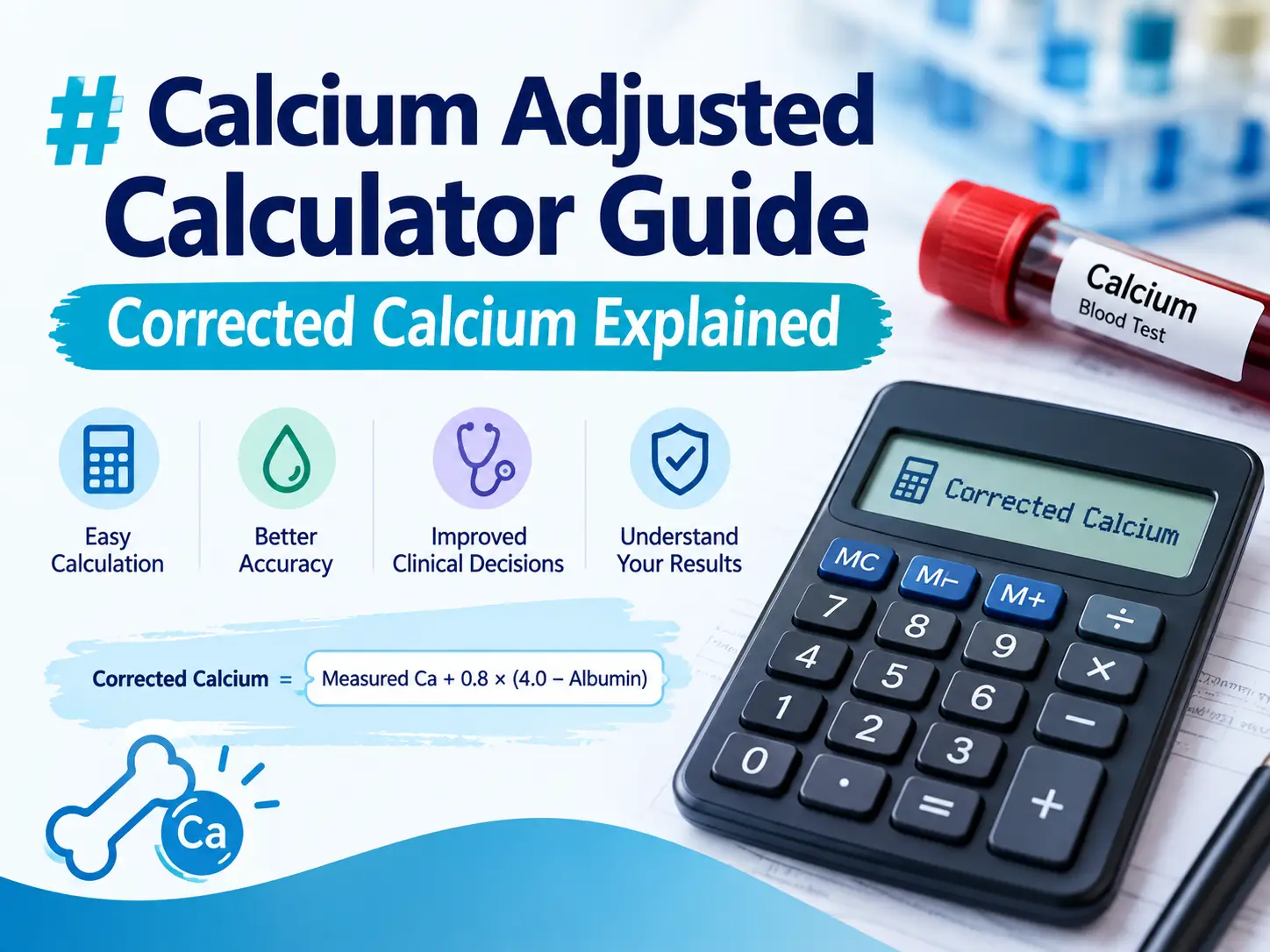
The calcium adjusted calculator is a medical calculator used to determine the corrected calcium level in individuals with abnormal albumin levels. Approximately 40% of calcium in the blood is bound to albumin: therefore, when there is a low level of albumin (which can be caused by liver disease, malnutrition, or inflammation), total calcium levels may be artificially decreased, whereas high albumin levels can make calcium levels appear high.
In this article, we discuss the calcium adjusted calculator functionality, provide the corrected calcium formula, describe how to use it, and examine the reference ranges.
If you are looking to calculate your corrected calcium right now, you can use our free Corrected Calcium Calculator.
Corrected Calcium Definition
Corrected calcium, or adjusted calcium, is a calculation that reflects the amount of physiologically active calcium in the blood. Underlying medical conditions can decrease albumin levels in the blood, decreasing the total amount of calcium. This is why it is important to make the correction to obtain the adjusted calcium value in these situations.
The calcium adjusted formula is as follows:
Corrected Calcium (mg/dL) = Serum Calcium + 0.8 × (4.0 - Serum Albumin)
Where:
- Serum Calcium = total calcium level in mg/dL
- Serum Albumin = total albumin level in g/dL
- 4.0 = normal serum albumin level in g/dL
- 0.8 = correction factor
For every 1.0 g/dL of decrease in serum albumin, the corrected calcium value will be 0.8 mg/dL higher than the measured value. The same applies for increases in albumin level.
Using a Calcium Adjusted Calculator
Using the calcium adjusted calculator is simple: you will need to input the serum calcium and albumin levels, and the calculator will do the rest.
To use the calculator correctly:
- Enter the serum calcium value (in mg/dL): This value represents the total calcium in the blood.
- Enter the serum albumin value (in g/dL): This value represents the total albumin in the blood.
- Click the "Calculate Corrected Calcium" button: The result will be displayed.
Corrected Calcium Example
Here is an example of how the calcium adjusted calculator can be used:
Suppose a patient had the following lab work results:
- Serum Calcium: 8.0 mg/dL
- Serum Albumin: 2.5 g/dL
Using the calcium adjusted formula:
Corrected Calcium = 8.0 + 0.8 × (4.0 - 2.5) = 8.0 + 0.8 × 1.5 = 8.0 + 1.2 = 9.2 mg/dL
The result indicates that the patient's corrected calcium value falls within the normal range.
Normal Corrected Calcium Range
The normal range for corrected calcium is:
| Unit | Normal Range |
|---|---|
| mg/dL | 8.5 - 10.5 mg/dL |
| mmol/L | 2.1 - 2.6 mmol/L |
Values below 8.5 mg/dL suggest the presence of hypocalcemia (low calcium levels), and values above 10.5 mg/dL suggest the presence of hypercalcemia (high calcium levels). Both of these conditions can be detrimental to one's health and should be treated by a medical professional.
When to Use Adjusted Calcium Calculator
The adjusted calcium calculator should be used in the following situations:
- To adjust total calcium for patients with abnormal serum albumin levels
- To assess critically ill patients: patients in critical condition can have abnormal serum albumin levels, and corrected calcium is essential in assessing these patients.
- To evaluate parathyroid function: both hyperparathyroidism and hypoparathyroidism can cause abnormal calcium levels and should be treated by a medical professional.
- To assess one's bone health: abnormal calcium levels can be indicative of osteoporosis or other bone diseases.
Limitations of the Adjusted Calcium Calculation
The main limitation of the adjusted calcium calculation is that it is only an estimate. There are several other factors that can affect one's calcium levels, including:
- Acid-base balance
- Critically ill patients: conditions, such as multiple organ failure, can cause calcium levels to be abnormal.
- Low or high albumin: abnormal levels of this protein can cause inaccurate results.
The gold standard for measuring calcium is the ionized calcium blood test. Ionized calcium refers to the free, unbound calcium in the blood, which is the physiologically active form. Ionized calcium can be measured directly with a special blood test, which may not be available in all hospitals.
However, if a direct ionized calcium blood test is not available, the adjusted calcium calculation provides a reasonable estimate.
Calcium's Role in the Human Body
Calcium is the most abundant mineral in the human body. It is necessary for proper functioning of the muscles and nerves, for blood clotting, and for the secretion of hormones. About 99% of the calcium in your body is stored in your bones and teeth, and only 1% circulates in your blood and extracellular fluid. The 1% is required for normal muscle and nerve function, and if blood calcium levels become too low, it can result in muscle spasms and abnormal heart rhythms. If blood calcium levels are too high, it can lead to kidney stones, bone pain, and problems with nerve function.
Albumin and Its Role in the Blood
Albumin is a protein that is manufactured in the liver. It provides "taxi" services for many substances in the blood, which is why approximately 40% of the calcium in the blood is bound to albumin, while approximately 10% is bound to other anions. The remaining 50% of the calcium is called ionized calcium and is the physiologically active part. If a person has abnormal liver function or is malnourished, it can decrease the amount of albumin in the blood. This, in turn, will increase the fraction of ionized calcium, which cannot be captured by a regular total calcium test. The adjusted calcium calculator helps estimate how much of the calcium is ionized, allowing clinicians to make the appropriate treatment decision.
Hypercalcemia - When Calcium Levels are Too High
Although the focus of this article is low calcium levels, high calcium levels (hypercalcemia) can also be dangerous and may require immediate medical attention. The main causes of hypercalcemia in hospitalized patients are hyperparathyroidism and cancer. The adjusted calcium calculator is also used for patients with hypercalcemia, as it can help determine if the patient is dehydrated (which increases albumin levels) and if they need to be given fluids to reduce the level of calcium in the blood.
Calcium in the Diet
Although the focus of this article is on low blood calcium levels, a healthy balanced diet can help maintain healthy blood calcium levels and prevent the development of osteoporosis. The recommended dietary allowance (RDA) of calcium for adults is approximately 1,000 mg per day, with a slightly higher dose (1,200 mg) recommended for women who are post-menopausal and men over the age of 70. Some of the best dietary sources of calcium include dairy products, leafy green vegetables, fortified plant-based milk, tofu, and canned sardines or salmon that are eaten with their bones.
If you are considering taking calcium supplements to increase your calcium levels, it is best to consult a registered dietitian or your primary care physician before doing so. They can help you determine if you need additional calcium and recommend the appropriate dose and form of calcium supplements.
Frequently Asked Questions (FAQ)
Related Tools
Related Articles
- Winter's Formula Explained: Metabolic Acidosis Compensation
- Rule of Nines for Burns
- Saturated vs Unsaturated Fats