How to Measure Waist and Hip Accurately
📅 January 1 2026 | ⏱️ 7 min read | 📂 Measurements
Being able to measure your waist and hip correctly is a skill. If you are using our Army Body Fat Calculator want to track your weight loss or just want to know your clothing size it is important you know how to measure your waist. This guide is going to cover the way of measuring your waist and hip the common errors that affect the measurement and how to use it to track your progress.
Why You Should Measure Waist and Hip
Waist. Hip measurements are not only vital in determining your general body shape but also play a key role in calculating your body fat percentage. There are reasons why waist and hip measurements are so important.
- Body Fat Percentage: Many body fat calculations and formulas including the Army body fat calculator, use waist and hip measurements to determine body percentages.
- Risk Evaluation: According to studies waist measurement is a critical indicator of health risk. Having much belly fat raises the risk of heart diseases and diabetes.
- Tracking Progress: While measuring on a scale can be handy it rarely shows you a representation of your progress. Tracking your waist and hip measurements periodically is a yet effective way of seeing if you're progressing.
- Clothes Size: Being able to measure your waist is essential if you ever want to know your clothes size.
- Waist to Hip Ratio: Determining your waist/hip ratio is key in determining your health. As waist measurement rises, belly increases, raising the risk for many diseases.
Tools Needed
Before you start measuring make sure you have the following equipment:
- A body measuring tape: You can also use a tape measure but a body tape is flexible enough to conform to any body shape.
- A mirror: Helps you make sure that the tape is not twisted or folded.
- Light clothing or being bare-skinned: Always measure on skin or light clothing. Avoid measuring on clothes.
- A paper or a measuring application: Keep track of your measurements on your method.
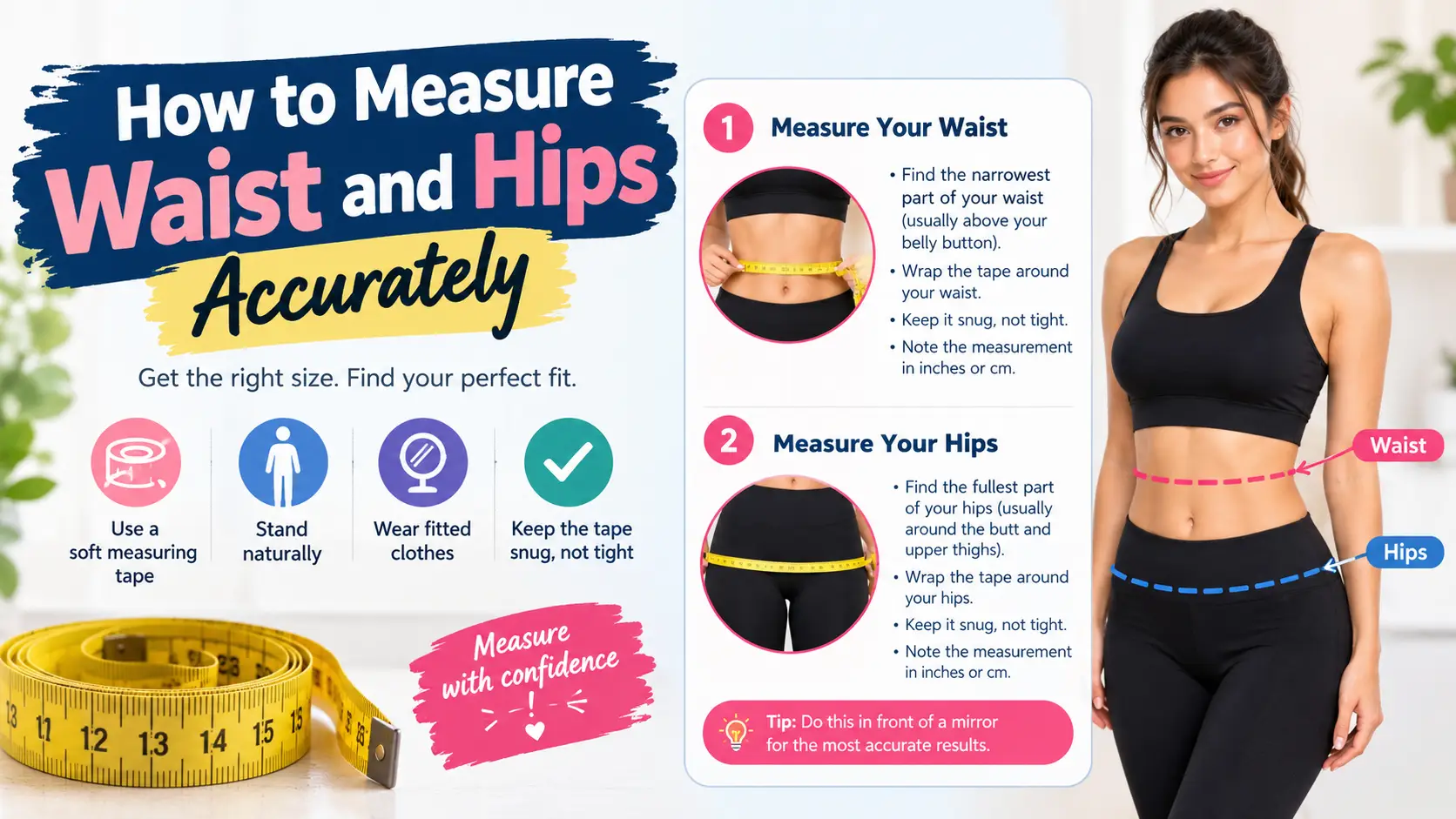
How to Measure Your Waist
Follow the steps to measure your waist.
- Stand straight: Make sure to stand with your feet together. Your body should be relaxed. Avoid pulling your stomach in.
- Find your waist: The waist is the part of your torso just above your belly button. If you're measuring your waist for the army body fat calculator the army body fat chart states that for men the waist should be measured at the navel while for women it should be the part.
- Wrap the tape measure around the waist: Make sure that the tape is tight enough to fit around your waist yet not so tight that it constricts your breathing. You should be able to fit two fingers between your body and the tape.
- Breathe normally: Avoid holding your breath. Measure your waist when you have exhaled.
- Read the measurement: Take note of where the measurement's at. Make sure to note it in centimeters or inches.
- Repeat: Take the measurement 2-3 times. Take the average.
How to Measure Your Hip
Follow the steps to measure your hip.
- Stand straight: Stand straight with your feet together.
- Find where the widest part of your hip is: The widest part of the hip is 7-9 inches below the waist.
- Wrap the tape measure around the hip: Ensure that the measurement is at the part. Keep the tape measure parallel to the floor. Make sure the tape is not sagging or too tight.
- Make sure it's parallel to the floor: Take a look in the mirror to ensure that the tape measure is parallel to the floor.
- Read the measurement: Read the measurement and note it down.
- Repeat: Take the measurement 2-3 times. Take the average.
Common Errors to Avoid
Avoid the following mistakes when measuring your hips and waist:
- Measuring over clothes: Measuring over bulky clothes would give you an inaccurate measurement. You should always measure on skin or light clothing.
- Pulling the tape measure in: This would constrict your waist. Will give you a smaller measurement. Make sure that the tape is not pinched.
- Letting the tape measure sag: Sagging waist measurement will give you a measurement. Make sure that the tape is not loose.
- Pulling your stomach in: This will give you a waist measurement.
- Measuring from the spot: Always measure your waist at the narrowest part. Avoid measuring at the naval (for women). Measure at the narrowest part for your hips.
- Measuring at times of the day: Measuring at times of the day will give you different measurements. It's best to measure at the time every day.
Waist to Hip Ratio
Waist to Hip Ratio (WHR) is calculated by dividing waist measurement by hip measurement. It is a determinant of general health. Below is a WHR chart.
| Waist to Hip Ratio (Men) | Waist to Hip Ratio (Women) | Summary |
|---|---|---|
| than 0.90 | Less than 0.80 | Low risk |
| 0.90 to 0.99 (Men) and 0.80 to 0.84 (Women) | 1.00 (Men) and 0.85 (Women) and above | Moderate risk |
| 1.0 and above (Men) and 0.85 and above (Women) | High risk |
As you can see the higher your WHR is, the higher your health risk is. The increase in WHR is highly attributed to increase in belly fat, which's extremely unhealthy.
Using the Measurements for Calculators
Your measurements can be used in other calculators such as the Army body fat calculator. Using your body measurements and the army body fat chart is a determinant to fitness and health for army trainees and soldiers.
If you're measuring your fitness progress make sure you combine it with trackers such as our FFMI calculator and calorie calculator.
How to Measure Your Waist Without a Tape Measure (The String Trick)
If you don't have a measuring tape at hand you can use a string or a shoelace to determine your waist size.
- Wrap the string around your waist at the desired spot.
- Pinch the string where the end meets.
- Lay the string on the ground (or on a table). Use a normal measuring tape or a ruler to measure the length.
While this is not as accurate as a body measuring tape it's a tool when measuring trends on a weekly basis.
Why Your Waist Measurement Changes (Even if You Don't Gain Fat)
You often find that your waist measurement fluctuates daily. This is an occurrence and is rarely related to fat gain. Your waist measurement largely depends on the following:
- Bloating: Eating meals or salty foods can cause bloating temporarily increasing waist size. Women often notice increased measurements around their cycle due to water retention.
- Time of Day: Your waist size tends to be smallest in the morning and largest in the evening. Measurements should be taken at the time each day for consistency.
- Posture: Sitting or slouching can compress your waist while standing tall will open it up. Always measure in a posture (ideally standing straight).
As you can see waist size is not an indicator of weight gain or loss. It's important to measure and consider averages over a few days rather than a single measurement.
Measuring for Clothing vs. Measuring for Health
It is important to know why you are measuring.
- For Health (Calculating Body Fat & WHR): Use a tape measure on bare skin and keep the tape snug against the body. You want the circumference of your body.
- For Clothing: When shopping online tailors often recommend measuring over the type of undergarments you plan to wear with the clothes. If you measure skin for a winter coat you might buy a size that is too small. Additionally clothing sizes can vary wildly between brands so relying on your body measurements (rather than a label size) is the most reliable way to get a good fit.