
Mucocele: Causes, Symptoms and Treatment
📅 November 5, 2026 | ⏱️ 8 min read | 📂 Oral Health
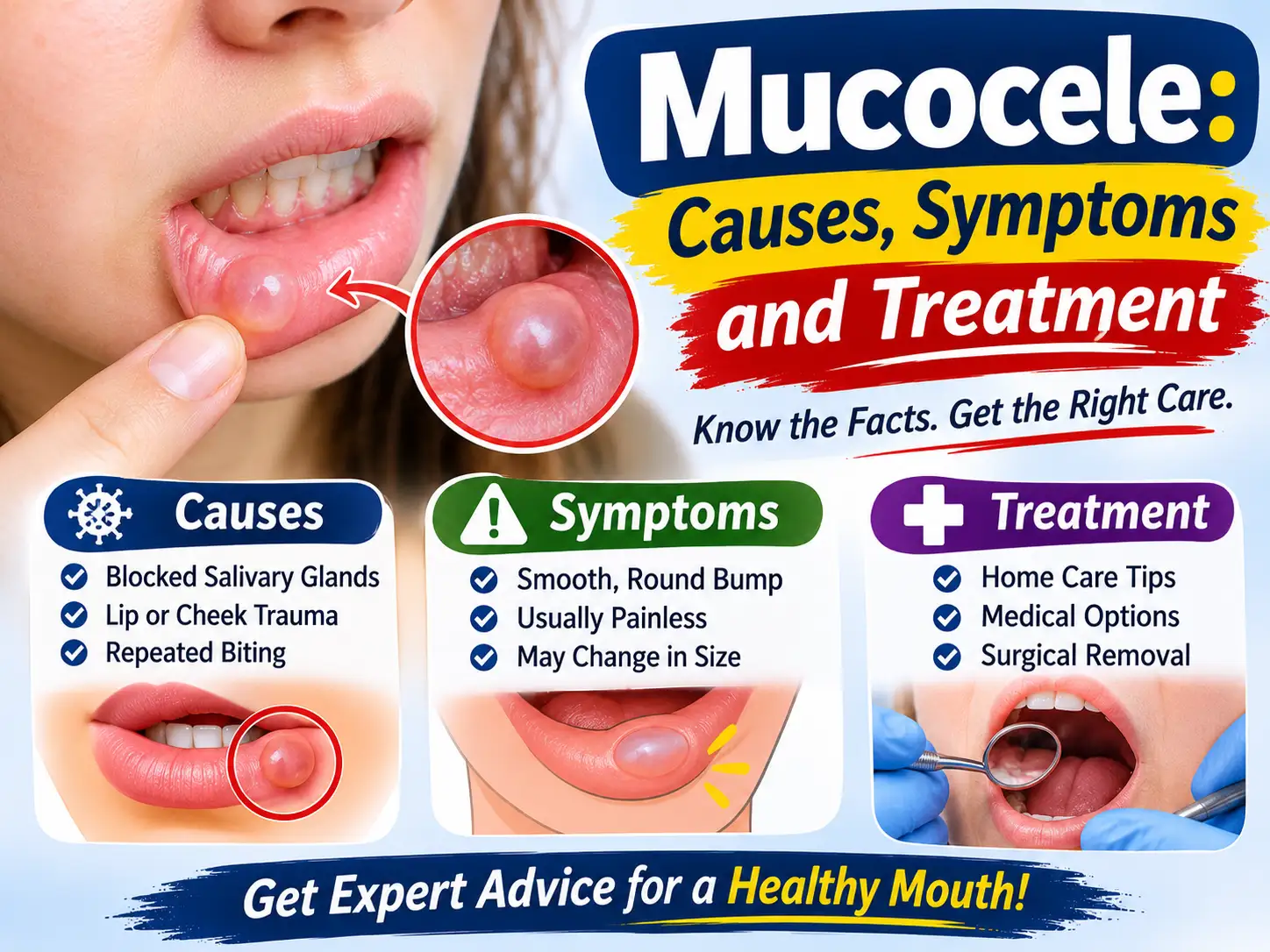
Have you noticed any sudden clear or blue lumps in your mouth, maybe on your bottom lip? While they may not be painful they can be irritating and cause concern. If you have suffered from these types of lumps you are most likely suffering from a Mucocele (plural Mucoceles).
In this article we will give you all the information you need to know about what a mucocele is, what causes them and how to treat an oral mucocele. We will also answer questions such as how to get rid of mucocele quickly and even whether they can affect your pets.
What is a Mucocele?
A Mucocele (also known as a Mucous Cyst or Salivary Gland Cyst) are non-cancerous sacs filled with fluid, which develop in the mouth due to a blockage or damage to the salivary gland duct.
They are extremely common in children, teenagers and young adults. While they can develop anywhere in your mouth they are most commonly found on the mucocele lip (bottom lip). They can also sometimes be found on the roof of the mouth (Palate) or the bottom of the mouth (called a Ranula).
Why do Mucoceles Develop?
The main cause of developing an oral mucocele is trauma to the salivary gland. This trauma can be caused by many things, usually without us realising. The most common causes are:
- Lip Biting – The number one cause of developing a Mucocele on the lip. If you are continually biting your bottom lip.
- Trauma – Accidentally biting, hitting your mouth, or eating foods that are sharp such as hard crisps or crusty bread can cause damage to your delicate salivary gland duct.
- Piercings – Lip rings or Tongue Piercings can cause irritation to the glands.
- Bad Oral Hygiene – Although not as common it can cause small blockages due to the build up of plaque.
- Orthodontics – Wearing braces or retainers can cause irritation to the inside of your lips.
Symptoms of an Oral Mucocele
Here are the signs of a mucocele in your mouth:
- Appearance – Usually dome shaped and painless. They can be clear, blue or match the colour of your skin.
- Location – Most commonly found on the bottom lip, however they can also develop on your cheeks, tongue or palate.
- Size – Can range from a small 1mm to a larger 2cm.
- Lump – Often develop into a swollen lump which will burst naturally. When they burst they will release clear salty liquid and will then heal. They will often come back after a few days or weeks.
How to Get Rid of a Mucocele (Home Remedies)
If your Mucocele is small and not causing any issues it will often disappear on its own within a few weeks. However if you want to know how to get rid of a mucocele here are some effective and safe ways to help speed up the healing process.
Stop Biting Your Lip
This is easier said than done but very important! If you continually bite the lump it will never heal so try to avoid this.
Salt Water Rinse
Rinse your mouth with warm salt water (½ tsp salt in a glass of warm water) 3-4 times per day. This will help keep the area clean and can help the lump to drain naturally.
Good Oral Hygiene
Brush your teeth gently twice a day and floss daily. Keeping your mouth as clean as possible will help to prevent infection if the lump bursts.
Avoid Irritants
Avoid eating spicy, salty or highly acidic foods which may irritate the lump. Avoid eating hard or sharp foods such as crisps.
Don’t Pop!
It is very tempting to pop it with a needle but DO NOT DO THIS. This can cause infection and pain and can cause more damage to the salivary gland meaning its more likely to come back.
When to See a Doctor
If you have tried the home remedies and still want to know how do I get rid of a mucocele then it is best to visit a Dentist or Oral Surgeon. You should also visit a professional if:
- The Mucocele is larger than 1cm.
- The Mucocele has been there for longer than 4-6 weeks.
- It is becoming painful or bleeding.
- It is affecting your ability to eat or speak.
Treatment by a Professional
- Excision – This is the most common treatment. A surgeon will numb the area and remove the lump and damaged salivary gland. This is a quick procedure done in the surgery.
- Laser – Some dentists use lasers to remove the lump with little bleeding and quick healing.
- Marsupialisation – A procedure where the lump is opened and sewn to surrounding tissue allowing it to drain.
Can a Dog Die from a Salivary Mucocele?
If you are a dog owner you may have searched for can a dog die from a salivary mucocele. Firstly it is important to note that a Mucocele in dogs is completely different to that of humans.
Salivary Mucocele (often known as a Salivary Cyst) in dogs is when saliva builds up and leaks into the tissues in the neck or below the jaw. Whilst it can look worrying it is rarely fatal. If the swelling becomes large then it can cause pressure on the airway or oesophagus making it difficult to breathe. This would be an emergency and you should visit a vet immediately.
Unlike in humans, Mucoceles in dogs will not often clear up on their own. They will often need the affected salivary gland removing. If your dog has any swelling below their jaw or neck then please consult your vet.
How to Prevent Mucoceles
While you cannot always prevent an oral Mucocele there are things you can do to reduce your risk:
- Avoid Bad Habits – Try to avoid chewing on your lips or inside your cheeks.
- Wear a Mouth Guard – If playing contact sports wear a mouth guard to protect your mouth.
- Ensure Your Appliances Fit – If you have braces or dentures ensure they fit properly and aren’t causing any irritation to your lips.
- Chew Food Slowly – Chew your food slowly to avoid accidentally biting your lip.
Conclusion
Discovering a lump in your mouth can be scary but a Mucocele is usually not something you need to worry about. They are a very common and harmless cyst caused by a small amount of trauma to the lip. If you avoid touching it, keep your oral hygiene up to standard and give it time most will heal on their own. If it doesn’t go away a quick visit to the dentist will sort it out.