
Military Press: Muscles Worked, Benefits & How To Do It
📅 November 5, 2026 | ⏱️ 8 min read | 📂 Fitness
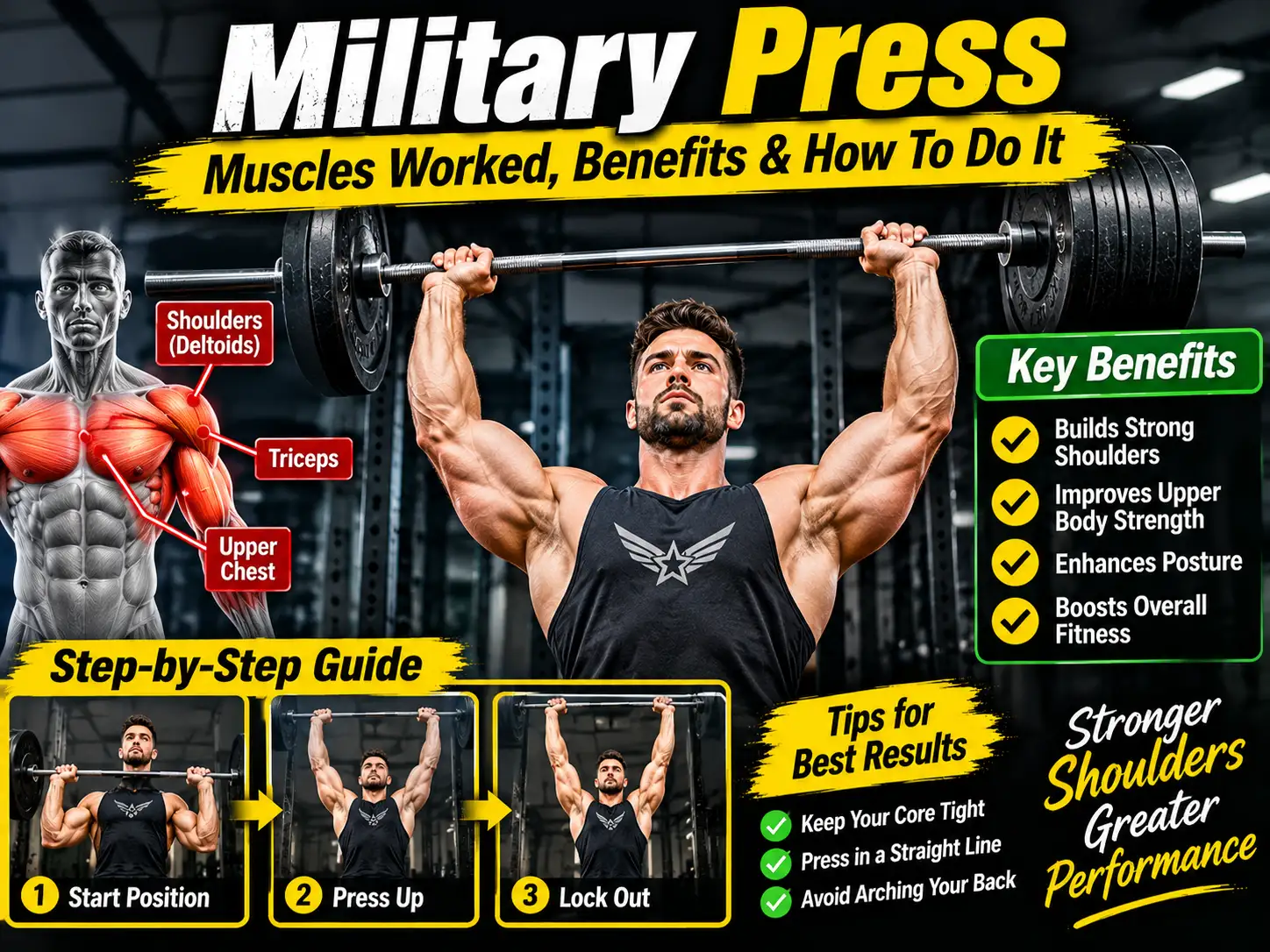
One of the best exercises for building strong and powerful shoulders is the military press. Whether you’re an experienced lifter or just starting out, this compound exercise is a must.
In this post, we’ll take you through everything you need to know about the military press, including the military press muscles worked, what muscles does the military press work, and how to perform a barbell or dumbbell military press.
What is a Military Press?
The military press (or overhead/strict press) is a compound movement performed by pressing a weight overhead until your arms are fully extended. You can perform it from either a standing or seated military press position.
The military press gets its name from needing to be performed in a strict position. This means your body needs to be at attention whilst performing, with a tight core. You can only use your upper body to press the weight and cannot use your legs to generate power (this would be a push press).
What Muscles Does the Military Press Work?
This is probably the most common question asked when thinking about military presses. The military press is mostly an upper body exercise but uses many different muscles.
Main Muscles Worked During the Military Press:
1. Shoulders (Primary)
The main muscle group worked during the military press is the deltoids. This muscle is split up into three sections, however, the military press targets the anterior deltoid and lateral deltoid very effectively. This allows you to raise your arm forwards and out.
2. Triceps (Secondary)
When pressing the weight up and locking out your elbows, your triceps brachii (muscles on the back of your upper arms) are heavily targeted. This muscle group is essential for locking out your arms.
3. Upper Chest & Traps (Stabilisers)
Your upper pectorals (chest) help to press the weight up along with your anterior delts. Your trapezius (traps) and serratus anterior work very hard to stabilise your shoulder blades, allowing your arms to move freely overhead.
4. Core
Whilst your arms are doing the main work during the press, your core muscles (abdominals, obliques and lower back) will be working extremely hard to stabilise your spine. If your core isn’t strong enough your lower back will round causing injury.
Benefits of Performing a Military Press
Now you know what muscles the military press works, why should you add it to your workout?
- Builds Raw Strength – One of the best exercises to build full upper body strength.
- Improves Shoulder Health – When performed correctly, this exercise will strengthen your stabilising muscles around your shoulder joint. Improving mobility and reducing the risk of injury.
- Improves Posture – Having to press overhead will engage your core and upper back to improve rounded shoulders and poor posture.
- Transfers To Real Life – Many real life activities involve overhead movements such as putting a box on a high shelf.
How To Perform A Barbell Military Press
To get the most out of this exercise you’ll need to perform it with strict form. Follow the steps below.
- Setup – Stand with your feet shoulder width apart. Have the barbell resting on your upper chest/clavicle. Your hands should be slightly wider than shoulder width.
- Engage Core – Squeeze your glutes and abs. Don’t over arch your lower back.
- Press – Inhale and press the barbell directly overhead. Tilt your head back slightly so the bar can go over your chin.
- Lockout – Once the bar has passed your forehead, tuck your head slightly forward (Getting Under the Bar). Lockout your elbows.
- Lower – Slowly lower the bar back to your chest. Make sure your core stays engaged throughout.
Dumbbell Military Press
If you don’t have a barbell, or want to fix muscle imbalances then the dumbbell military press is a great option.
When using dumbbells each arm will have to work independently. This means your weaker side cannot rely on your stronger side. It also allows for a more natural range of motion for your shoulders. You can perform this exercise from a standing position or seated military press with a backrest to provide extra support for your lower back.
Seated vs Standing Military Press
Both of these variations will provide you with an effective press. However, they can provide different benefits.
- Standing Military Press – This variation will require you to engage your core and lower body more. As you’re standing, your whole body will be engaged to keep you balanced.
- Seated Military Press – Using a bench with a backrest will provide you with more isolation on your shoulders. You won’t have to engage your core muscles, allowing you to focus purely on pressing. This is great for those who suffer from lower back issues.
Common Mistakes To Avoid
Even if you know what muscles the military press works, performing it incorrectly can affect the effectiveness of the exercise and potentially cause injury. Avoid the following mistakes.
- Over Arching Lower Back – This is the most common mistake people make. If your back rounds too much the exercise becomes an incline bench press. Putting dangerous strain on your lumbar spine.
- Elbows Flaring – Keep your elbows tucked slightly in front of the bar. This helps to protect your shoulder joint.
- Using Legs To Bounce – Don’t use your legs to bounce the weight. Unless you’re intentionally doing a push press, this shouldn’t be happening. The military press should be performed with strict form.
- Ego Lifting – Lifting too heavy will cause you to have poor form. Start with a light weight and get the movement pattern right before increasing the weight.
How To Programme The Military Press
To build strong shoulders you should include this exercise 1-2 x per week.
- Strength – 3-5 sets of 3-5 reps using a heavy weight.
- Hypertrophy – 3-4 sets of 8-12 reps using a moderate weight.
Conclusion
The military press is a fundamental exercise in any serious strength training programme. Knowing what muscles the military press works (mainly deltoids, triceps & upper chest) will help you train more effectively. Whether you choose to perform the barbell version, dumbbell military press or seated military press, mastering this overhead movement will give you powerful shoulders & a stronger upper body.