Personal Exercise Programme: Best Group Exercises to Do at Home
📅 November 5, 2026 | ⏱️ 10 min read | 📂 Fitness
Starting on your fitness journey can be overwhelming. There are so many different opinions online about what to do. Do you need a gym membership? How many days should you be exercising? What exercises should you be doing?
Whether you want to get fit independently or with friends and family we have created this guide to show you how to create your own exercise programme. We will also tell you the best group exercises at home.
What Is A Personal Exercise Programme (PEP)?
A Personal Exercise Programme is a planned and structured document showing the exercises you will be doing to achieve your goals. This can often be known as a PEP in schools or by personal trainers.
A good PEP will take into account:
- Your current fitness levels
- Your goals (weight loss, muscle gain, improved endurance)
- Physical limitations
Why You Should Have A Personal Exercise Programme
Without a plan you are likely to get into a rut. With a PEP you will have:
- Structure: It tells you exactly what to do when you enter your living room/gym.
- Safer: Ensures you are working all muscle groups equally to avoid injury.
- Progression: A progression plan to make your exercises more challenging.
- Accountable: A written programme will keep you on track.
How to Build a Personal Exercise Programme & Best Group Exercises at Home
Creating your own PEP is easier than you think! Simply follow these 5 steps:
1. Set SMART Goals
- Specific
- Measurable
- Achievable
- Relevant
- Timely
Poor goal: I want to get fit.
Good goal: I want to be able to do 10 push ups in a row in 4 weeks.
2. Know Your Current Fitness Levels
Be honest with yourself. Are you able to walk for 30 minutes without getting out of breath? Can you do a squat?
3. How Many Days & How Intense?
The World Health Organisation recommend that you do:
- At least 150-300 mins of moderate intensity aerobic exercises.
- Muscle strengthening exercises 2 times a week.
As a beginner start with 2-3 days a week.
4. Plan Your Sessions Using The FITT Principle
- Frequency
- Intensity
- Time
- Type
5. Track Your Progress
Keep a journal or download an app to track your sessions. Every 4-6 weeks look at your plan. Are you getting stronger? If not then increase your weights, reps or time.
Best Group Exercises To Do At Home
Working out can be a lonely experience. Finding the best group exercises will make you work harder. When working out with a partner or group you will stay accountable and have fun whilst getting fit.
You won’t need much space or equipment. Simply get a group of friends or family members or set up a virtual group via Zoom. Here are the best group exercises at home you can do in your living room or garden.
1. Bodyweight Circuits (With A Partner)
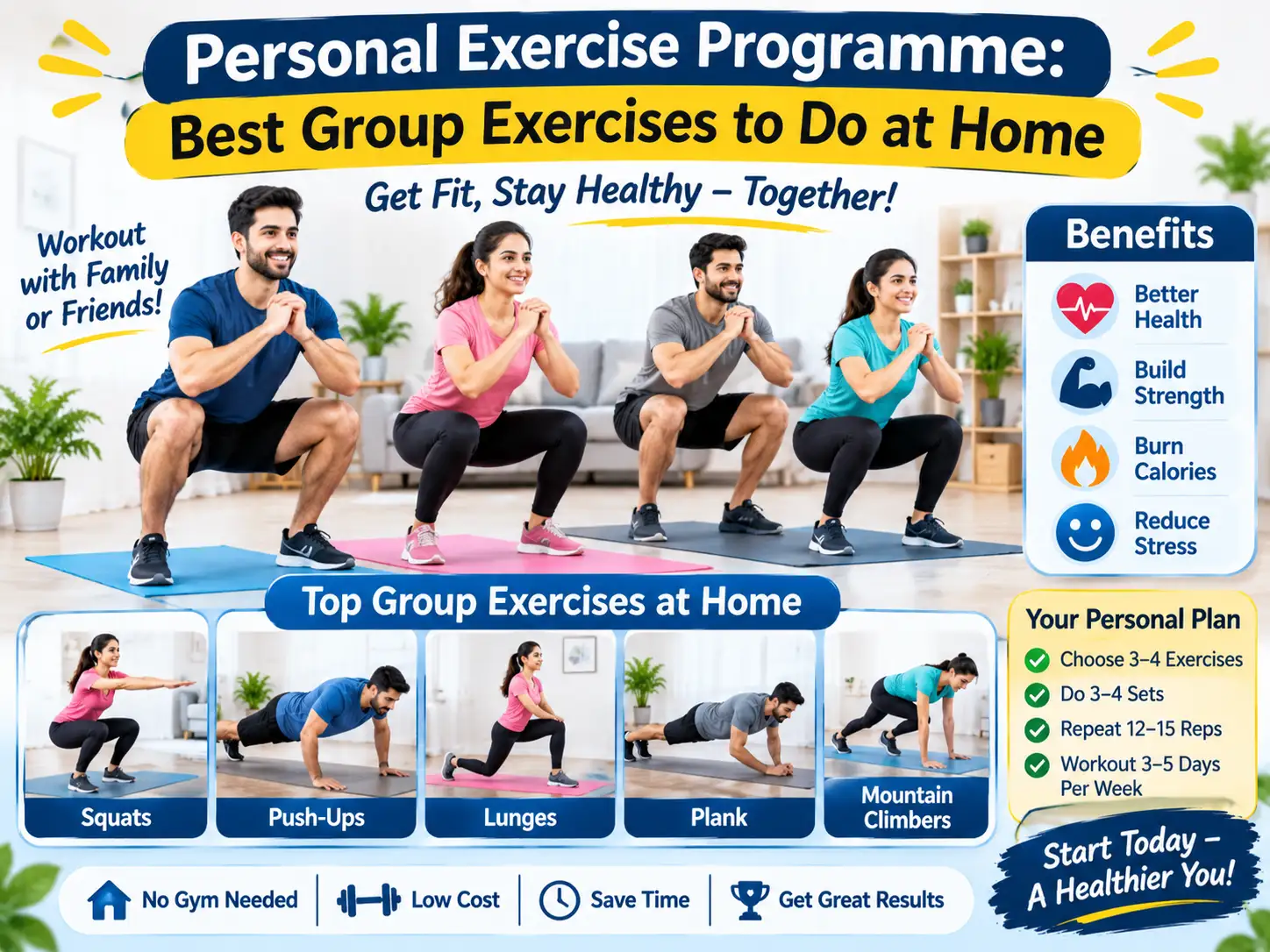
Bodyweight circuits are perfect for group exercises. You won’t need any equipment. You can do them in a circle taking it in turns or doing them all at the same time.
- Squats
- Push ups (on knees or toes)
- Lunges (walking lunges or static)
- Plank (core isometric hold. Who can hold it the longest?!)
Have a friendly competition! Do 1 min of squats. Whoever stops first has to do 10 extra jumping jacks.
2. Partner Resistance Exercises
Use your partner as resistance.
- Sit ups with partner (do a sit up and high 5.)
- Resistance Sprints (One person places their hands on the other persons shoulders. They will provide slight resistance whilst doing sprints.)
- Wheelbarrow walks (One person holds the other persons legs whilst they walk on their hands. This is great for upper body and core.)
3. Relays & Obstacle Course
If you have kids this is the best group exercise. Set up an obstacle course in your garden or living room.
- Jump over the pillow.
- Crawl under the chair.
- Do 5 jumping jacks.
- Run back and tag the next person.
This is HIIT!
4. Group Yoga Or Stretching
Not all group exercises need to be intense. Doing a yoga video together is a great way to improve flexibility, reduce stress and bond with others. Great for recovery days.
5. Zumba
Play an upbeat playlist and have a dance off! Doing a dance workout video together is one of the most fun ways to get your heart pumping. As you’ll be laughing along with your friends it doesn’t feel like working out.
How To Create A Balanced Routine
To really see results you need to include cardio, strength and flexibility. Below is an example of how you can fit your personal exercise programme and group exercises into your week.
- Monday (Personal): 30 mins strength training (Upper body – push ups & dumbbell rows)
- Tuesday (Group): 30 mins high intensity circuits with a partner (squats, lunges & relays)
- Wednesday (Personal): Active recovery. 30 mins brisk walk.
- Thursday (Personal): 30 mins strength training (Lower body – squats & deadlifts)
- Friday (Group): Dance workout or group yoga.
- Saturday (Group): Long walk, hike or obstacle course with the family.
- Sunday: Rest.
Common Mistakes When Creating Your PEP
Even with a great plan there are some common mistakes to avoid:
- Overtraining: This can lead to burnout and injury. Start small.
- No warm up: Always do a 5 min dynamic warm up.
- No rest days: Your muscles grow when you’re resting.
- Not eating properly: You can’t out train a poor diet. Use our Calorie Calculator to ensure you’re eating correctly.
- Comparing to others: Focus on your own progress. Only compare to your past self.
How To Stay Motivated
Motivation can be short lived but discipline will help you achieve your goals. Here are some tips to help:
- Plan it: Treat it like an appointment with your doctor. Add it to your calendar.
- Group: Knowing your friends are waiting for you in the living room will reduce the chances of you cancelling.
- Reward yourself: Set targets. If you complete your PEP for the whole month reward yourself with new fitness gear.
- Notice how you feel: Notice how much better you feel after a workout. Use this as fuel.
Conclusion
Creating your own exercise programme is the first step to becoming a healthier and stronger you. With a structured personal programme and best group exercises you will have the perfect balance between discipline and fun. You don’t need to pay for gym memberships. Simply plan your workouts, find some space and get started.