
Walking Calorie Calculator
Calculate how many calories you burn walking with our free walking calorie calculator. Whether you are walking for weight loss, general health or to train for a marathon, you can get an accurate estimate of how many calories you burn using our walking calculator. Walking is one of the most accessible and effective forms of exercise, and now you can keep track of how many calories you are burning.
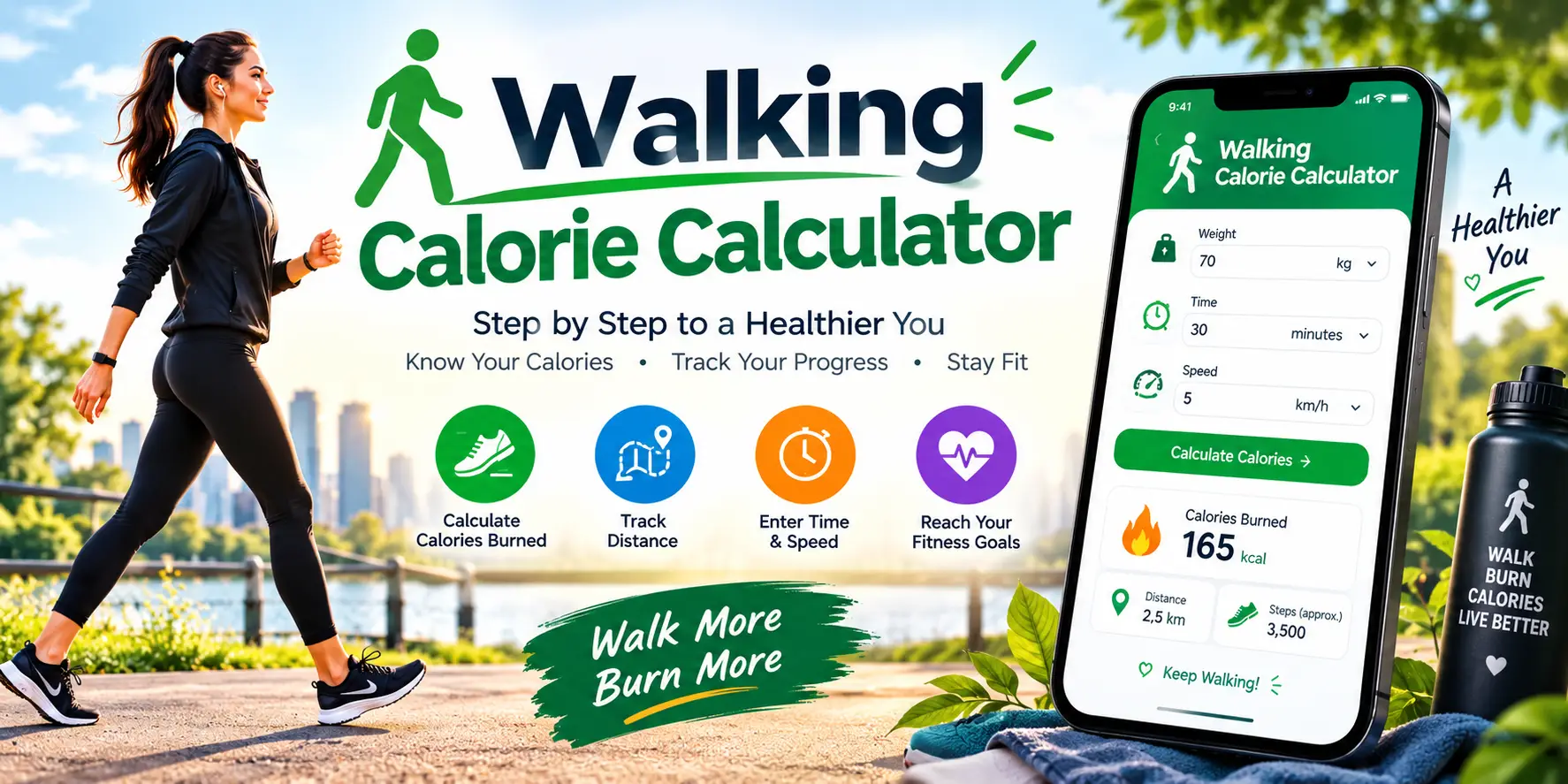
Calories Burned
How Many Calories Does Walking Burn?
Walking is one of the most accessible and effective forms of exercise. There is no equipment needed, it can be done pretty much anywhere and is easy on the joints. How many calories does walking burn? The number of calories burned walking will depend on:
- Body weight
- Walking pace
- Time spent walking
- The terrain you are walking on
Using our walking calorie calculator takes the guesswork out of the equation.
On average, a 150-pound person burns 100 calories a mile walking. A 200-pound person burns about 130 calories a mile walking. Burning calories walking uphill or at a faster pace increases the number of calories burned walking. Our walking calorie calculator takes this into account by using MET values to give you an accurate and personal calories burned estimate.
How to Use the Walking Calorie Calculator
Using our calories burned walking calculator is simple:
- Enter your weight. The more accurate the better!
- Enter the average speed you walk at. This is how many miles per hour (mph) you walk at on average
- Enter the minutes you walk for
- Click calculate walking calories and see how many calories you have burned!
Why Walking is Great for Weight Loss
Walking is underrated when it comes to weight loss. While it may not burn as many calories as HIIT or running, it has other benefits such as:
- It's low impact
- It's sustainable (you can do it all your life)
- Burning calories is still a good thing!
- Improves mental health
- Improves heart health
- Is a form of cardio
To create a calorie deficit needed for weight loss, the calories burned walking or doing any other activity need to outweigh the calories you eat. Using a Calorie Calculator can help you work out how many calories you need to eat to create this calorie deficit.
How to Burn More Calories While Walking
Want to know how to burn more calories walking? There are several ways to increase the number of calories you burn walking, including:
- Walking faster
- Walking uphill or on a treadmill
- Walking for longer
- Walking with intervals
- Walking with weights
- Walking on different surfaces such as sand
Walking vs Running: Which Burns More Calories?
Running burns more calories per minute than walking, but how many calories does walking burn? Running can be hard on the joints. Walking is a sustainable form of exercise that is easier on the joints and has been shown to burn calories.
It all depends on what you want to achieve and how much time you have. If you have time to walk for an hour, this is great for your joints and will burn calories. If you are short on time, running or incline walking may be a better option.
Walking and Heart Health
As well as being a calorie burner, walking is great for your heart. Walking has been shown to reduce blood pressure, cholesterol, and the risk of heart disease and strokes. It improves circulation, strengthens the heart and is good for overall heart health.
The American Heart Association recommends at least 150 minutes of moderate exercise such as brisk walking per week. This is great when combined with a healthy diet to reduce the risk of heart disease and support heart health.
The "Talk Test": How to Gauge Your Walking Intensity
A good way to measure the intensity of your walking is by using the "Talk Test". If you can sing while walking, you are exercising at a very light intensity (Zone 1). If you can hold a conversation but not sing, you are exercising at a moderate intensity (Zone 2). If you are struggling to talk at all, you are exercising at a high intensity (Zone 3 or 4).
There are several different heart rate zones that are all beneficial for different reasons. Zone 2 is the fat-burning zone and is the most popular heart rate to aim for when trying to lose weight. Zone 4 is a higher intensity and is good for improving your cardiovascular and respiratory fitness. If you are new to walking or want to start walking as a form of exercise, you should aim to be in Zone 2 or 3.
How Many Steps is a 30-Minute Walk?
If you like to keep track of steps rather than time, a 30-minute walk is about 3,000 to 4,000 steps. If you walk faster, you can get up to 4,500 steps. This can then be combined with the walking calculator above and the step goals from your smartwatch. (You can use our Steps to Calories Calculator if you want to convert from steps to calories.)
The Mental Health Benefits of Walking
The benefits of walking don't stop at burning calories - it's great for your mental health too. Walking, particularly outdoor walking (sometimes called 'forest bathing'), has been shown to reduce the stress hormone cortisol. A 10-minute walk after a stressful meeting or a 30-minute walk outside is a great way to lower your stress levels and improve your overall mood.
Why Walking After Meals is a Game-Changer
If you want to improve your metabolism, taking a 10-15 minute walk after your largest meals is a great way to do it. Walking after meals has been shown to lower blood sugar levels by helping to move glucose from the bloodstream to the muscles, where it can be used for energy. It can also help to aid digestion and prevent bloating. Although walking after meals won't burn a huge number of calories (it could burn 50-70 calories depending on your size and speed), it has incredible metabolic benefits.
FAQs About Walking Calories
Related Tools
Related Articles
- Lean Bulk Guide: How to Gain Muscle Without Fat
- Does Muscle Weigh More Than Fat?
- Five Food Groups: A Complete Guide